



LIFE CYCLE
Perennial

PLANT CHARACTERISTICS
Showy Blooms

GROWTH HABIT
Climbing

BLOOM SEASON
Spring–Summer

FLAVOUR PROFILE
Ornamental

SUITABLE FOR
Outdoor

PLANTING SEASON
Spring

FRUIT SIZE
N/A

PLANT HEIGHT
6–10 ft

LIGHT REQUIREMENT
Full Sun

WATER NEEDS
Moderate

HARDINESS ZONES
USDA 5–9

CONTAINER GARDEN
Yes

PLANT SPACING
60–90 cm

PLANTING DEPTH
1 cm

GROWING CONDITIONS
Well-Drained Soil
Frequently Asked Questions
Can Red Climbing Rose produce abundant vibrant red blooms throughout the flowering season?
Can Red Climbing Rose produce abundant vibrant red blooms throughout the flowering season?
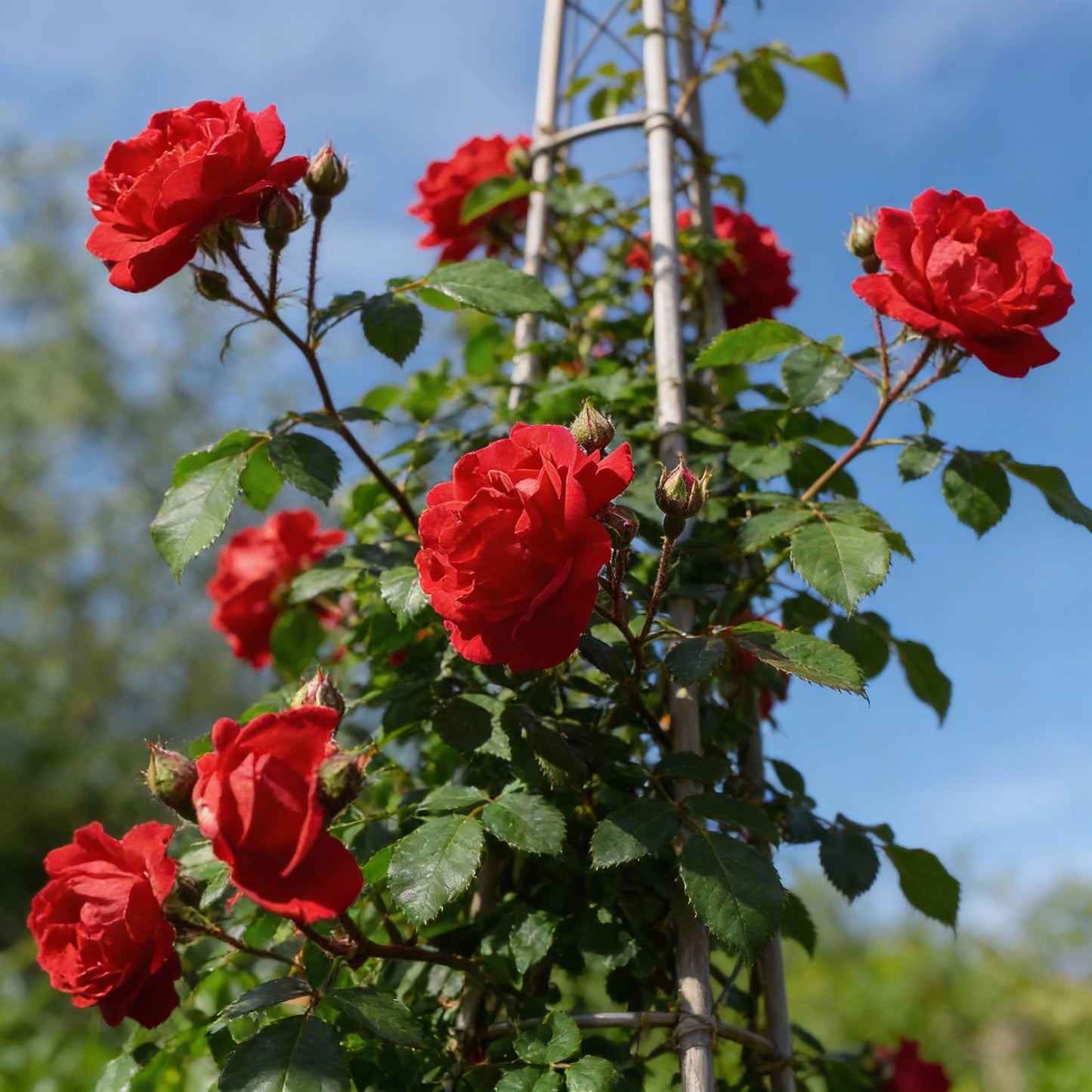
Yes. This climbing rose is admired for producing abundant, richly colored red flowers that create a striking vertical display over an extended blooming period.
Do the flowers attract bees and other beneficial pollinators?
Do the flowers attract bees and other beneficial pollinators?
Yes. The nectar-rich blooms attract bees and other beneficial pollinating insects while adding beauty to the garden.
Can Red Climbing Rose be trained to grow on trellises, fences, or pergolas?
Can Red Climbing Rose be trained to grow on trellises, fences, or pergolas?
Yes. Its vigorous climbing habit makes it ideal for covering trellises, arbors, pergolas, fences, walls, and other vertical garden structures.
Will regular pruning and deadheading encourage healthy growth and continued flowering?
Will regular pruning and deadheading encourage healthy growth and continued flowering?
Yes. Routine pruning and the removal of spent blooms help maintain a tidy plant, encourage vigorous new growth, and support repeat flowering.
Can Red Climbing Rose flowers be used in fresh floral arrangements?
Can Red Climbing Rose flowers be used in fresh floral arrangements?
Yes. The elegant blooms and long stems make beautiful additions to bouquets, floral arrangements, and decorative displays.
How is Red Climbing Rose different from Bush Rose?
How is Red Climbing Rose different from Bush Rose?
Red Climbing Rose (Rosa species) produces long, flexible canes that can be trained over vertical supports, while Bush Rose grows as a compact, self-supporting shrub with an upright growth habit and does not require climbing structures.