



Life Cycle
Perennial

Plant Characteristics
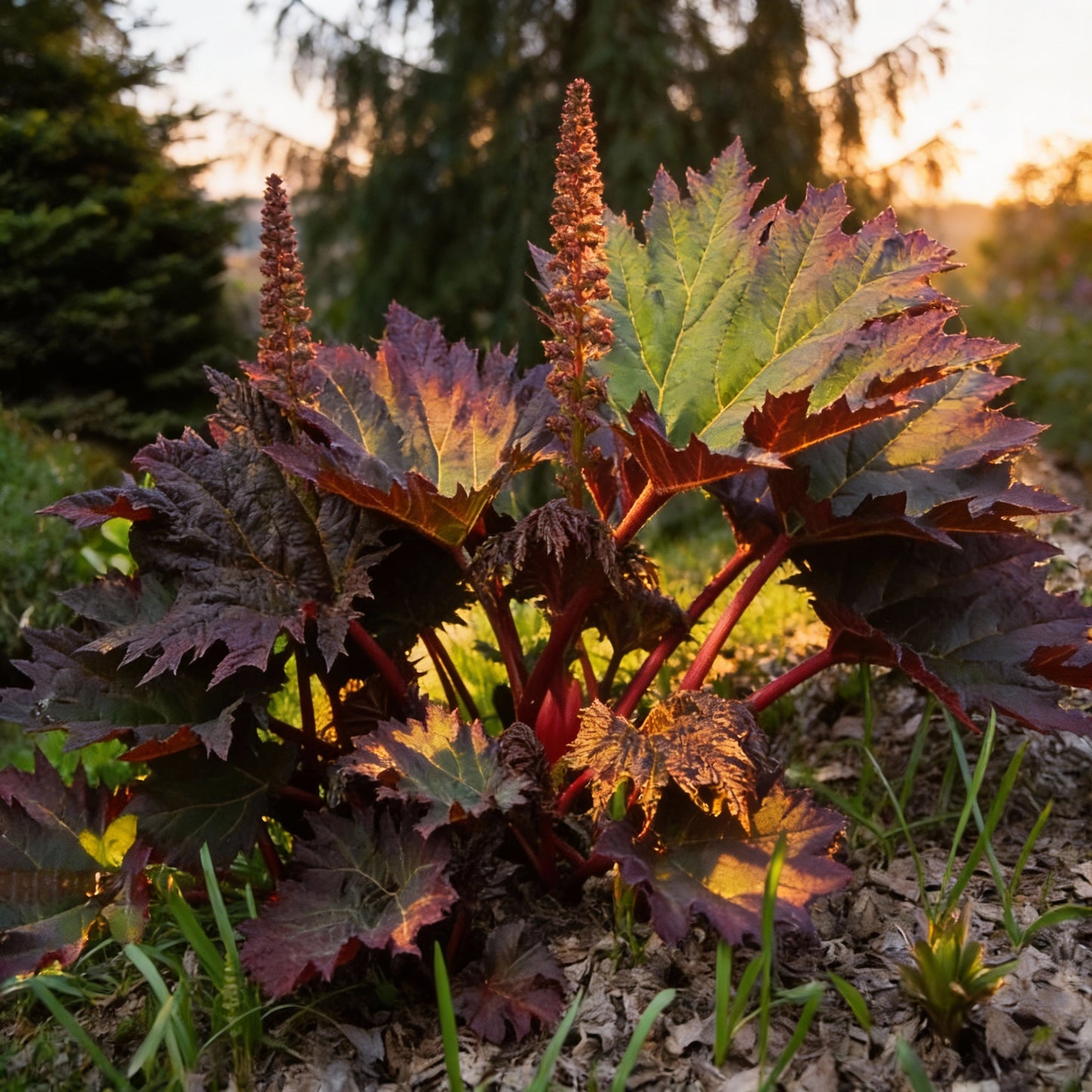
Large dramatic foliage

Growth Habit
Clump-forming

Bloom Season
Late Spring–Summer

Flavour Profile
Medicinal and ornamental use

Suitable for
Outdoor

Seed Type
Open-pollinated

Plant Type
Perennial Medicinal

Planting Season
Spring

Fruit Size
Seed clusters

Plant Height
1.5–2.5 m

Light Requirement
Full Sun

Water Needs
Moderate

Hardiness Zones
4–8

Container Garden
No

Plant Spacing
90–120 cm

Planting Depth
1–2 cm

Growing Conditions
Cool climate
Frequently Asked Questions
What makes Tangut rhubarb different from culinary rhubarb?
What makes Tangut rhubarb different from culinary rhubarb?
Rheum palmatum Tanguticum is grown primarily for its dramatic ornamental foliage and traditional uses, rather than as a standard culinary rhubarb crop.
Why is this plant especially suited to botanical collections?
Why is this plant especially suited to botanical collections?
Its large architectural foliage, clump-forming habit, and substantial 1.5–2.5 m height give it a distinctive structural presence.
Can its traditional medicinal use replace professional medical advice?
Can its traditional medicinal use replace professional medical advice?
No. Traditional use does not establish a medical treatment claim, and the plant should not be used medicinally without appropriate expert guidance.
How much room does the foliage need to develop properly?
How much room does the foliage need to develop properly?
The recommended spacing is 90–120 cm, while the large foliage means gardeners should allow sufficient open space around each clump.
Would a hot climate be ideal for this perennial?
Would a hot climate be ideal for this perennial?
No. The page identifies cool climates as preferred and lists USDA hardiness zones 4–8.
Can Tangut rhubarb be maintained successfully in a container?
Can Tangut rhubarb be maintained successfully in a container?
The product specifications list container gardening as unsuitable, so planting directly in an appropriate outdoor site is preferable.