



Life Cycle
Perennial

Plant Characteristics
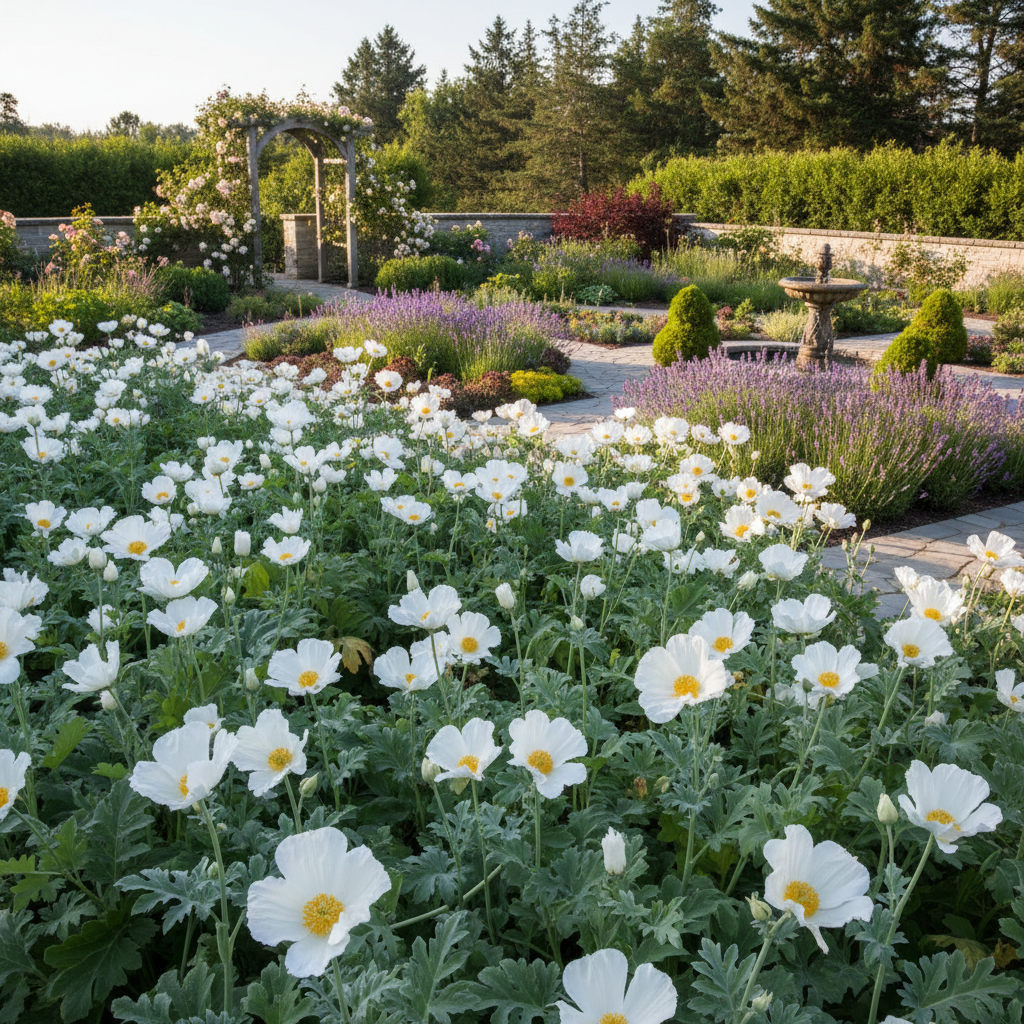
Golden centers

Growth Habit
Spreading

Bloom Season
Late Spring

Flavour Profile
Ornamental

Suitable for
Outdoor

Planting Season
Spring

Fruit Size
N/A

Plant Height
5–8 Feet

Light Requirement
Full Sun

Water Needs
Low to Moderate

Hardiness Zones
USDA Zones 8–10

Container Garden
No

Plant Spacing
4–6 Feet

Planting Depth
Surface Sow

Growing Conditions
Well-drained soil
Frequently Asked Questions
Can Romneya Coulteri spread beyond its original planting area?
Can Romneya Coulteri spread beyond its original planting area?
Yes. It has a spreading habit and deep roots, so choose a permanent location with enough space rather than a confined planting site.
Why is Romneya Coulteri unsuitable for containers?
Why is Romneya Coulteri unsuitable for containers?
The plant develops deep roots and spreads gradually. The product page specifically recommends open garden spaces rather than container cultivation.
Can Tree Poppy be used in a pollinator garden?
Can Tree Poppy be used in a pollinator garden?
Yes. Its large white flowers can attract bees and butterflies, making it suitable for ornamental and pollinator-focused garden designs.
What companion plants work with Romneya Coulteri?
What companion plants work with Romneya Coulteri?
Choose plants that tolerate full sun and relatively dry conditions. Give the Tree Poppy enough room so its spreading growth does not crowd smaller plants.
How can Romneya Coulteri fit a low-water landscape?
How can Romneya Coulteri fit a low-water landscape?
Once established, it is described as drought tolerant. It can suit dry garden designs where full sun and well-drained conditions are available.
Why should Tree Poppy be planted in its permanent location?
Why should Tree Poppy be planted in its permanent location?
Deep roots can make later relocation difficult. Selecting a spacious, sunny site before planting reduces the need to disturb the established root system.