


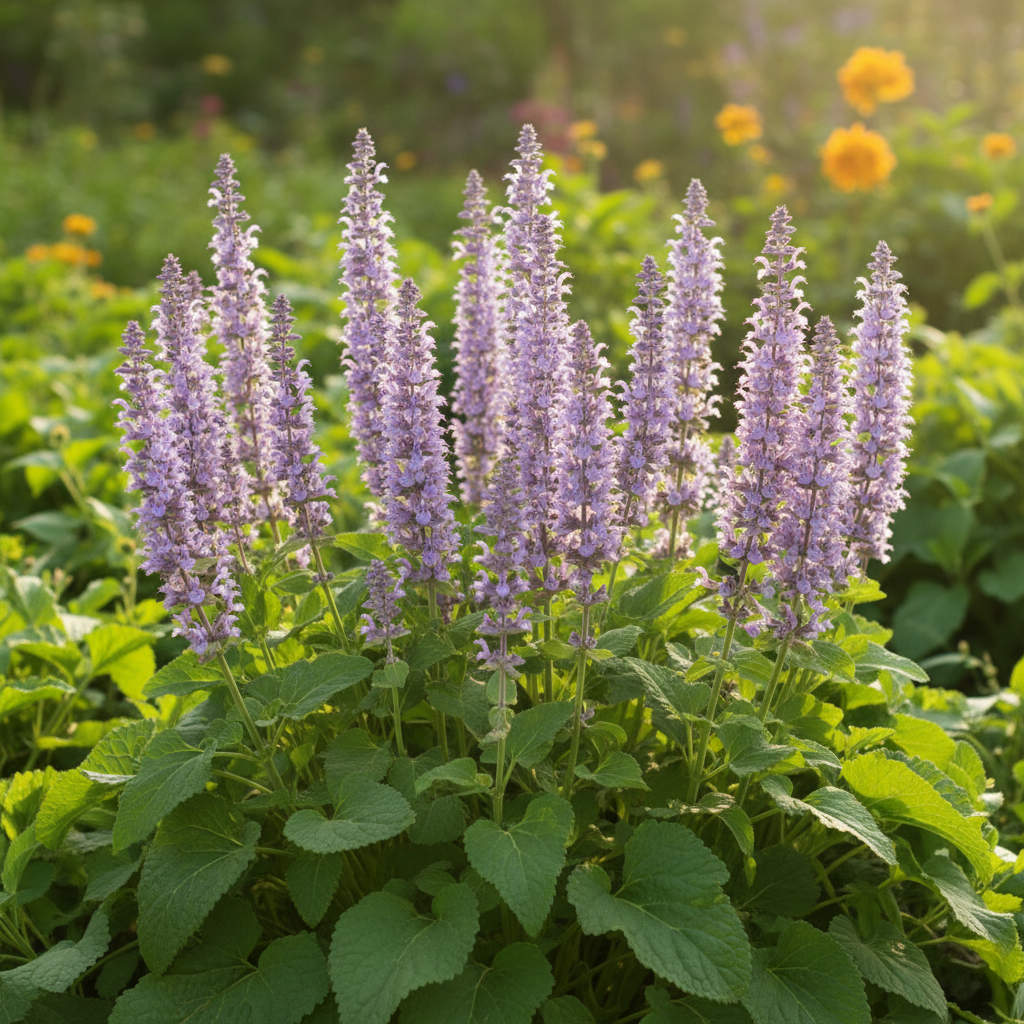

LIFE CYCLE
Perennial

PLANT CHARACTERISTICS
Herbaceous

GROWTH HABIT
Upright

BLOOM SEASON
Late spring

FLAVOUR PROFILE
Aromatic

SUITABLE FOR
Outdoor

SEED TYPE
Flower seeds

PLANT TYPE
Herb

PLANTING SEASON
Spring

FRUIT SIZE
N/A

PLANT HEIGHT
80–120 cm

LIGHT REQUIREMENT
Full sun

WATER NEEDS
Moderate

HARDINESS ZONES
5–9

CONTAINER GARDEN
Yes

PLANT SPACING
40–50 cm

PLANTING DEPTH
Surface sow

GROWING CONDITIONS
Well-drained
Frequently Asked Questions
The listing says "Perennial," but clary sage is often considered biennial — which is accurate?
The listing says "Perennial," but clary sage is often considered biennial — which is accurate?
Salvia sclarea is genuinely more accurately described as a biennial in most climates, typically forming a leafy rosette in its first year and flowering in its second, so the "Perennial" label may be an oversimplification.
Is clary sage essential oil a real product, and what is it used for?
Is clary sage essential oil a real product, and what is it used for?
Yes, clary sage oil is a genuine and widely used aromatherapy product, though this listing is for garden planting seed, not a supplement or therapeutic product.
Why is it called "Clary" sage?
Why is it called "Clary" sage?
The name comes from the Latin "clarus" (clear), tied to its traditional historical use as an eye-clearing wash, and it was also historically used to flavor wines like Muscatel.
Does clary sage self-seed aggressively?
Does clary sage self-seed aggressively?
Yes, it can self-seed prolifically in favorable conditions and has been noted as weedy or even invasive in some regions, so monitoring its spread is worthwhile.
Are the colorful parts of the flower spike true petals or something else?
Are the colorful parts of the flower spike true petals or something else?
The showy, papery colored sections are largely bracts (modified leaves) surrounding the smaller true flowers, contributing to the plant's long-lasting visual display.
Why does this plant need to be cut back after blooming?
Why does this plant need to be cut back after blooming?
Trimming spent flower stalks tidies the plant's appearance and can help redirect energy, especially important given its biennial tendency to decline after flowering.