


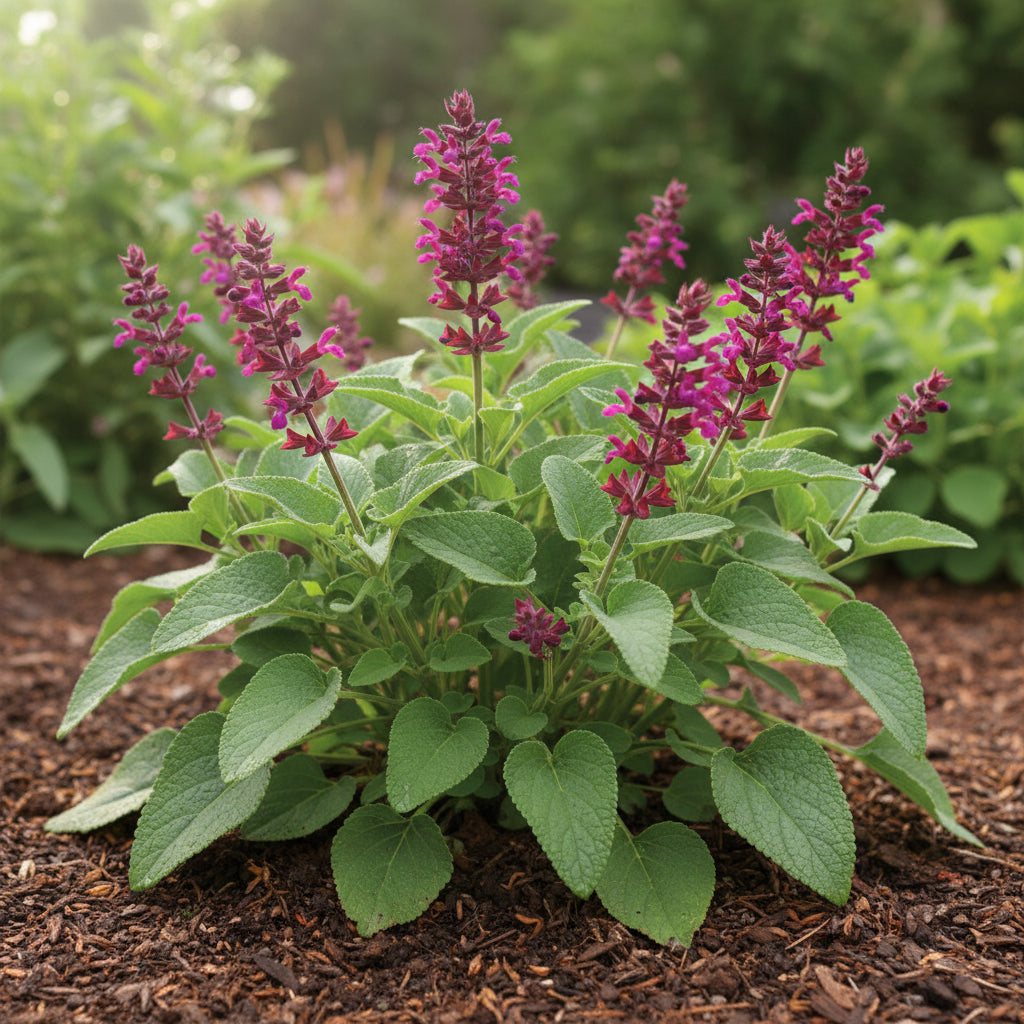

LIFE CYCLE
Perennial

PLANT CHARACTERISTICS
Fragrant foliage

GROWTH HABIT
Spreading groundcover

BLOOM SEASON
Spring summer

FLAVOUR PROFILE
Ornamental pollinator

SUITABLE FOR
Outdoor

SEED TYPE
Open pollinated

PLANT TYPE
Flowering perennial

PLANTING SEASON
Spring

FRUIT SIZE
N/A

PLANT HEIGHT
30–60 cm

LIGHT REQUIREMENT
Partial sun

WATER NEEDS
Low

HARDINESS ZONES
USDA 7–10

CONTAINER GARDEN
Yes

PLANT SPACING
30–45 cm

PLANTING DEPTH
Surface sow

GROWING CONDITIONS
Well drained
Frequently Asked Questions
Why is Salvia spathacea useful in pollinator gardens?
Why is Salvia spathacea useful in pollinator gardens?
Its flowers provide an ornamental feature for wildlife-friendly garden spaces and the product page specifically recommends it for pollinator gardens.
Can Hummingbird Sage tolerate dry conditions after establishment?
Can Hummingbird Sage tolerate dry conditions after establishment?
Yes. The page states that established plants tolerate drought well and have low water requirements.
Does Salvia spathacea spread along the ground?
Does Salvia spathacea spread along the ground?
Yes. Its listed growth habit is spreading groundcover, making it useful for filling suitable garden areas.
Can Hummingbird Sage grow in containers?
Can Hummingbird Sage grow in containers?
Yes. The specifications list container gardening as suitable for this perennial flowering plant.
What light level is recommended for Hummingbird Sage?
What light level is recommended for Hummingbird Sage?
The product page lists partial sun and notes that it can grow in sunny to partially shaded locations.
Why should spent flowers be trimmed?
Why should spent flowers be trimmed?
Removing spent flowers can encourage healthy growth and help extend the flowering display.