


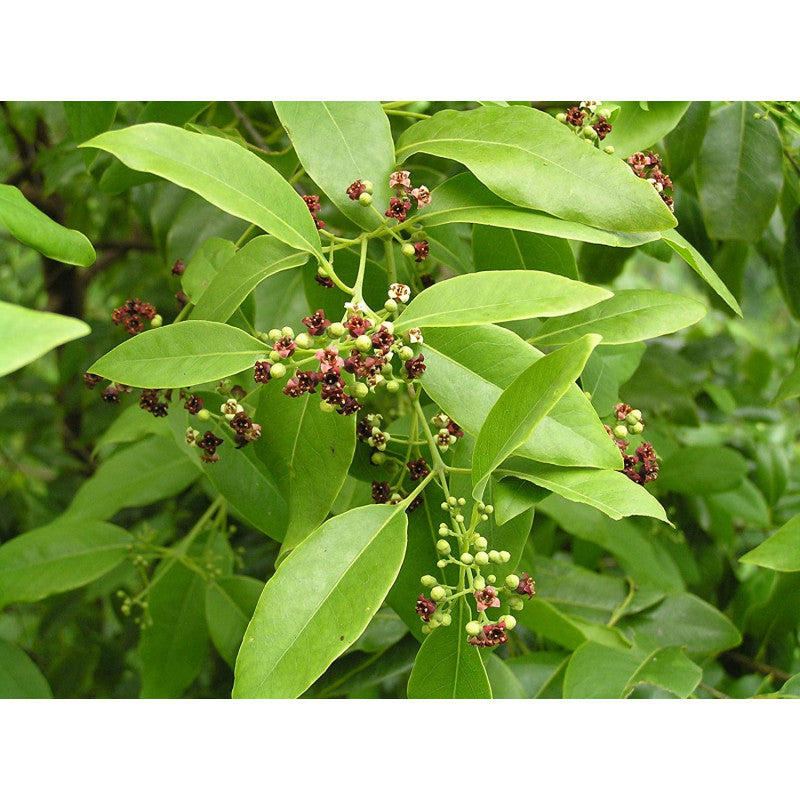

Life Cycle
Perennial

Plant Characteristics
Evergreen Tree

Growth Habit
Upright

Bloom Season
Spring-Fall

Flavour Profile
Aromatic

Suitable for
Outdoor

Seed Type
Heirloom

Plant Type
Tree

Planting Season
Spring-Summer

Fruit Size
Small Drupe

Plant Height
4-20m

Light Requirement
Full Sun

Water Needs
Moderate

Hardiness Zones
10-12

Container Garden
No

Plant Spacing
3-5m

Planting Depth
1cm

Growing Conditions
Tropical Dry
Frequently Asked Questions
Why does sandalwood need to be planted near a host plant?
Why does sandalwood need to be planted near a host plant?
It's a semi-parasitic tree that taps into a host's root system through specialized structures to draw extra nutrients, especially in its early years, which is why nitrogen-fixing companion plants are recommended.
Are there legal restrictions on growing or harvesting sandalwood?
Are there legal restrictions on growing or harvesting sandalwood?
Sandalwood harvesting has historically been regulated in parts of India due to past overexploitation, so it's worth checking current local regulations before planning to harvest wood from a mature tree.
Will a young sandalwood tree smell fragrant, or does that come later?
Will a young sandalwood tree smell fragrant, or does that come later?
The valuable fragrance is concentrated in the heartwood, which only develops after decades of growth, so young trees won't have the aromatic wood associated with sandalwood products.
Does buying these seeds give me sandalwood oil or incense-ready material?
Does buying these seeds give me sandalwood oil or incense-ready material?
No, this is planting stock for growing a tree from scratch. Usable fragrant heartwood typically isn't ready for harvest until the tree is 20 or more years old.
Why isn't this tree suited to container growing?
Why isn't this tree suited to container growing?
Its parasitic root relationship with a host plant and eventual deep root system make it poorly suited to the confined space of a container long-term.
Is patience really required with this tree?
Is patience really required with this tree?
Yes, from host-dependent early growth to a multi-decade wait for usable wood, sandalwood is very much a multi-generational planting project rather than a quick landscape addition.