


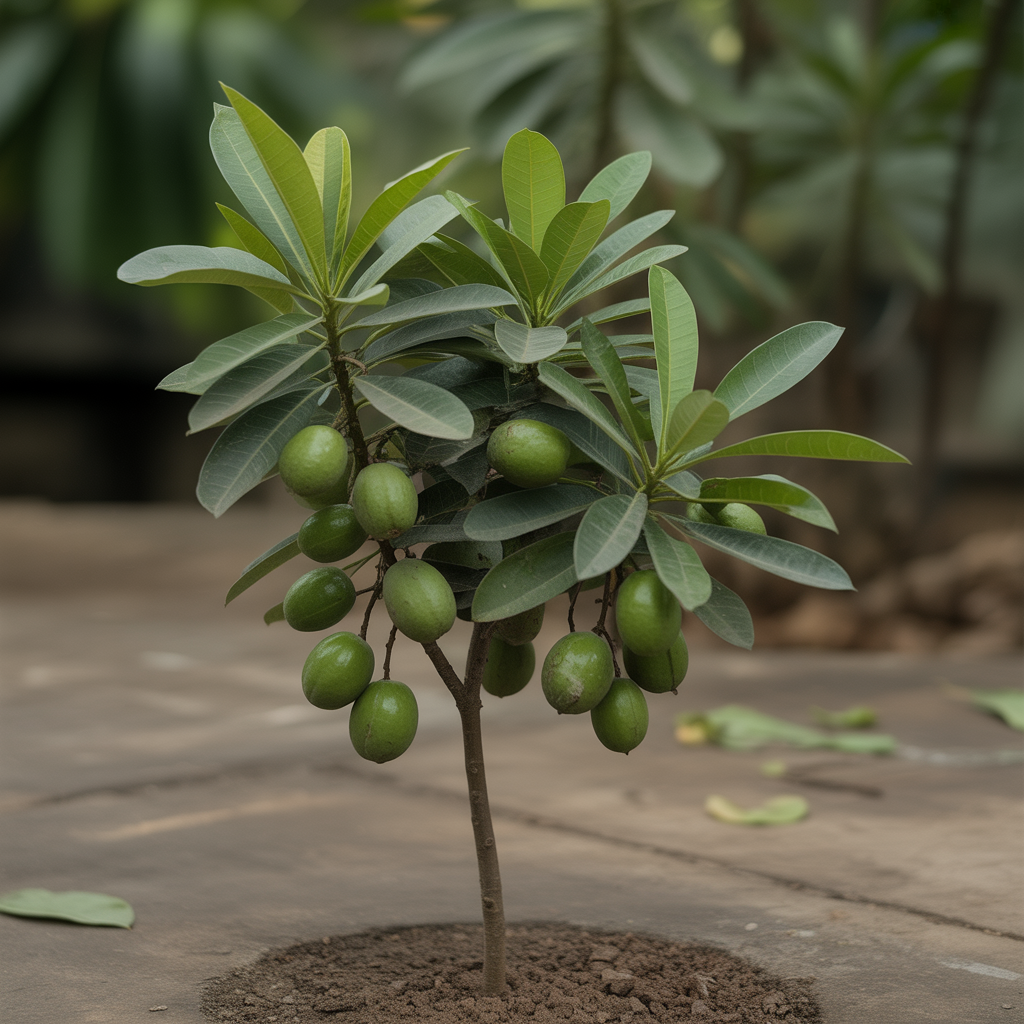

LIFE CYCLE
Perennial

PLANT CHARACTERISTICS
Evergreen

GROWTH HABIT
Tree

BLOOM SEASON
Spring

FLAVOUR PROFILE
Sweet

SUITABLE FOR
OUTDOOR

PLANTING SEASON
Spring to monsoon

FRUIT SIZE
2 to 4 inches

PLANT HEIGHT
25 to 40 feet

LIGHT REQUIREMENT
Full sun

WATER NEEDS
Moderate

HARDINESS ZONES
USDA Zones 10 to 11

CONTAINER GARDEN
No

PLANT SPACING
20 to 25 feet

PLANTING DEPTH
1 to 1.5 inches

GROWING CONDITIONS
Warm
Frequently Asked Questions
What makes Sapota suitable for a tropical home orchard?
What makes Sapota suitable for a tropical home orchard?
Its evergreen tree growth and warm climate preference make it suitable for spacious tropical gardens and orchard settings
How much space should be allowed around a mature Sapota tree?
How much space should be allowed around a mature Sapota tree?
The page recommends 20 to 25 feet between plants, providing room for the tree to develop its large mature canopy
Can Sapota be planted near other tropical fruit trees?
Can Sapota be planted near other tropical fruit trees?
Yes, it can be included in a tropical orchard when each tree receives full sun and enough space for mature growth
How can young Sapota trees be protected from unsuitable weather?
How can young Sapota trees be protected from unsuitable weather?
Protect young plants from frost and maintain warm growing conditions, particularly during their early establishment
Why is patience important when growing Sapota from seed?
Why is patience important when growing Sapota from seed?
Sapota is a long lived perennial tree, so fruiting can take time after planting and requires consistent care during establishment
How should mature Sapota fruits be handled at harvest?
How should mature Sapota fruits be handled at harvest?
Harvest the fruits when they are fully mature, then handle them carefully to avoid bruising the soft textured fruit