



LIFE CYCLE
Perennial

PLANT CHARACTERISTICS
Delicate

GROWTH HABIT
Clump forming

BLOOM SEASON
Early Spring

FLAVOUR PROFILE
Not applicable

SUITABLE FOR
Outdoor

PLANTING SEASON
Autumn

FRUIT SIZE
Not applicable

PLANT HEIGHT
15 to 25 cm

LIGHT REQUIREMENT
Full sun

WATER NEEDS
Moderate

HARDINESS ZONES
4 to 8

CONTAINER GARDEN
Yes

PLANT SPACING
10 to 15 cm

PLANTING DEPTH
5 to 10 mm

GROWING CONDITIONS
Well drained
Frequently Asked Questions
Are Scilla bulbs toxic if a pet or child accidentally eats one?
Are Scilla bulbs toxic if a pet or child accidentally eats one?
Yes, like many squill species, Scilla bulbs contain compounds that are toxic if ingested, so keeping pets and curious children away from the bulbs is a sensible precaution.
Since this is sold as seed rather than bulbs, how long until it reaches flowering size?
Since this is sold as seed rather than bulbs, how long until it reaches flowering size?
Growing squill from true seed takes considerably longer than starting from bulbs, often several years before the plant matures enough to bloom.
Why is this plant good for naturalizing under deciduous trees?
Why is this plant good for naturalizing under deciduous trees?
As a spring ephemeral, it completes its bloom cycle and stores energy before tree canopies fully leaf out, making it well suited to naturalizing in woodland or lawn settings.
How does this compare to the more common Siberian squill (Scilla siberica)?
How does this compare to the more common Siberian squill (Scilla siberica)?
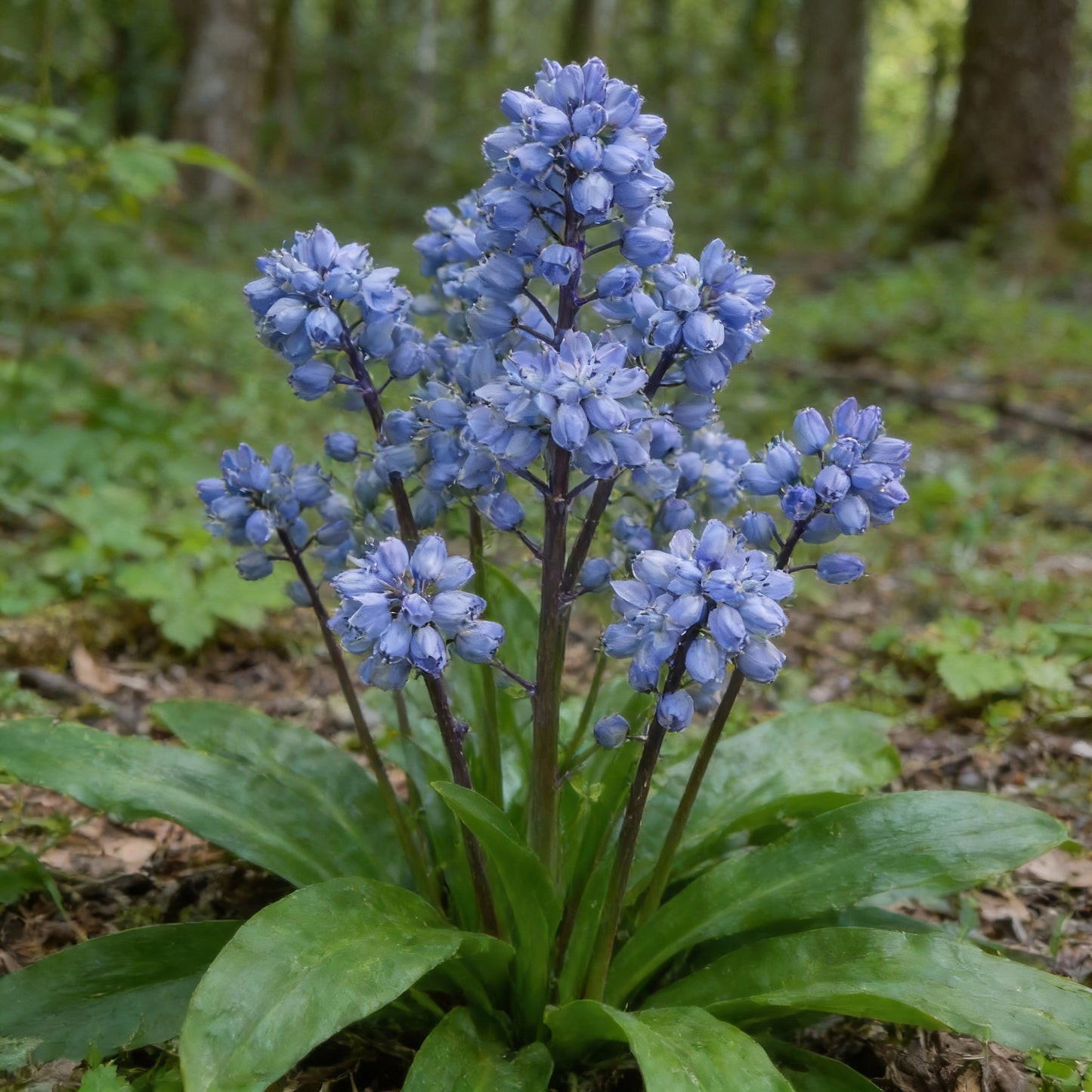
Scilla bithynica is a rarer species with slightly looser flower clusters, native to Turkey and the Balkans, compared to the more widely planted and commercially common Siberian squill.
Why does the foliage need to die back naturally rather than be cut early?
Why does the foliage need to die back naturally rather than be cut early?
Allowing the leaves to yellow and wither naturally lets the plant photosynthesize and recharge the bulb for next year's bloom, similar to other spring bulbs like tulips.
What does "bithynica" refer to in this plant's name?
What does "bithynica" refer to in this plant's name?
It references Bithynia, an ancient region in northwestern Turkey, reflecting part of this squill's native range.