


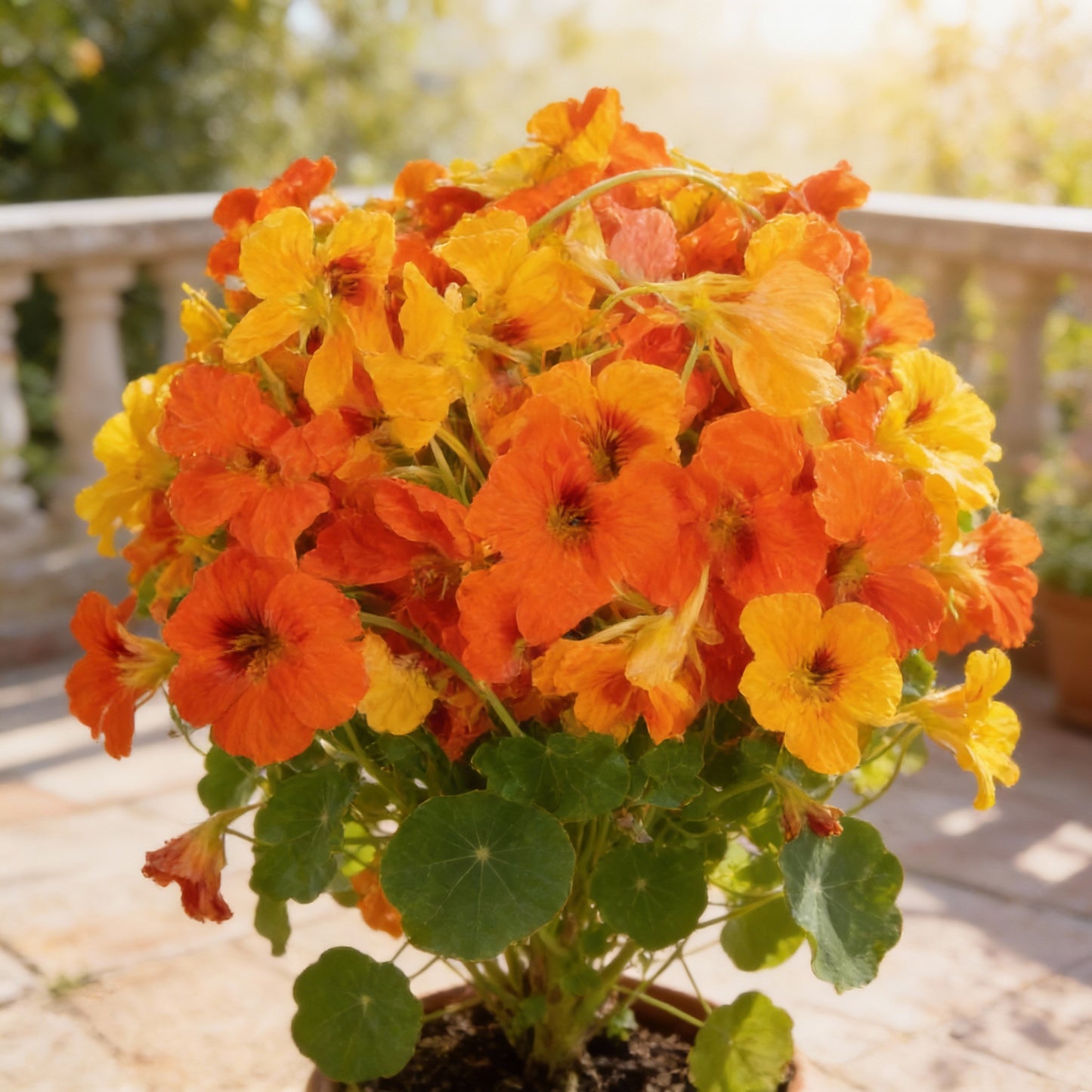

LIFE CYCLE
Annual

PLANT CHARACTERISTICS
Fast-growing

GROWTH HABIT
Trailing

BLOOM SEASON
Spring

FLAVOUR PROFILE
Edible

SUITABLE FOR
Outdoor

PLANTING SEASON
Spring

FRUIT SIZE
N/A

PLANT HEIGHT
25–40 cm

LIGHT REQUIREMENT
Full sun

WATER NEEDS
Moderate

HARDINESS ZONES
9–11

CONTAINER GARDEN
Yes

PLANT SPACING
10–15 cm

PLANTING DEPTH
1–2 cm

GROWING CONDITIONS
Well-drained soil
Frequently Asked Questions
Why does the listing recommend poor, low-fertility soil?
Why does the listing recommend poor, low-fertility soil?
Nasturtiums are unusual in that rich, high-nitrogen soil promotes lush foliage at the expense of flowers, so leaner soil actually produces more abundant blooms.
Are the flowers and leaves genuinely edible?
Are the flowers and leaves genuinely edible?
Yes, both have a peppery, watercress-like flavor and are commonly used fresh in salads or as a garnish.
Does this plant help protect vegetables from pests?
Does this plant help protect vegetables from pests?
Yes, nasturtiums are a classic companion plant, often used as a "trap crop" that draws aphids away from more valuable vegetable plants nearby.
What does "Single" mean in this variety's name?
What does "Single" mean in this variety's name?
It refers to the simple, non-ruffled petal form of the bloom, as opposed to "double" nasturtium varieties with extra layered petals.
Will this plant self-seed and return next year?
Will this plant self-seed and return next year?
Yes, nasturtiums often self-seed readily, and in warm climates can behave almost like a returning perennial through volunteer seedlings.
Are the seed pods used for anything beyond ornamental value?
Are the seed pods used for anything beyond ornamental value?
Yes, nasturtium seed pods are sometimes pickled and used as a homemade substitute for capers.