


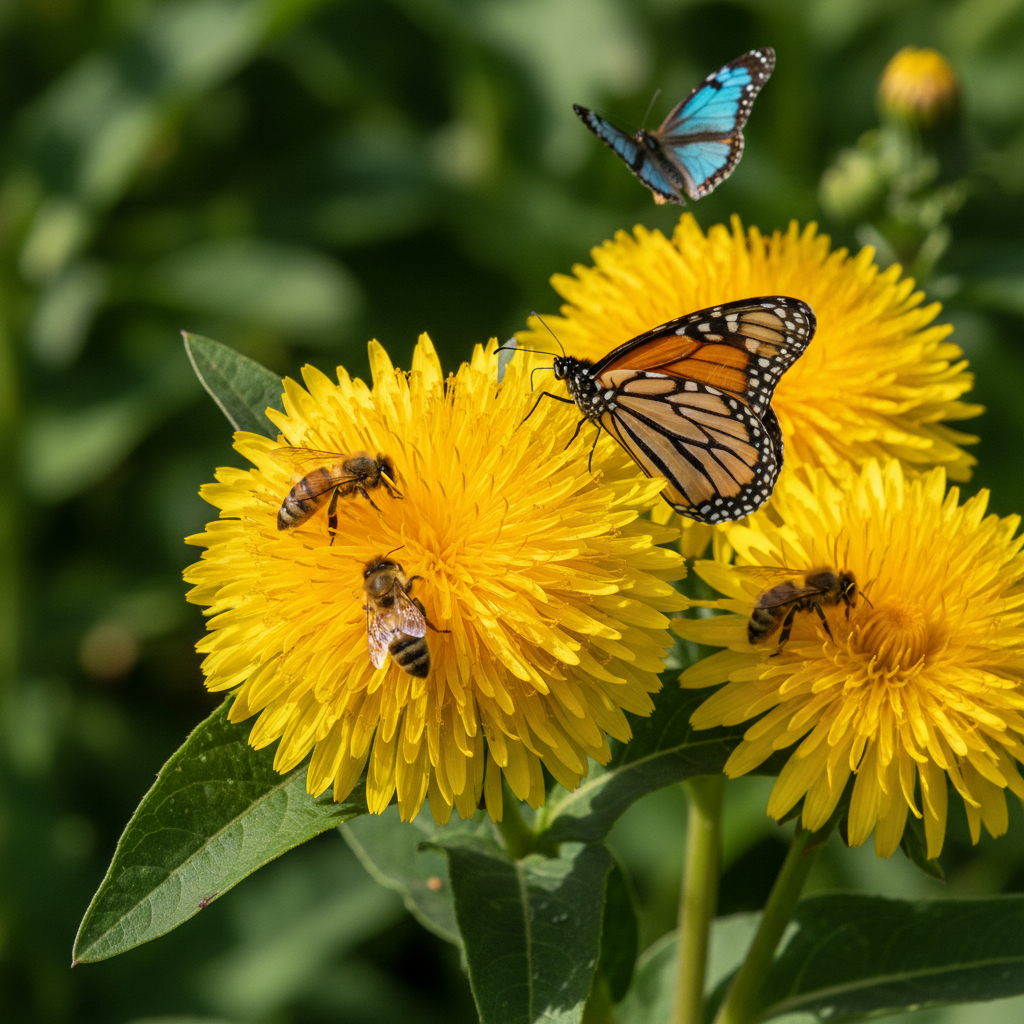

Life Cycle
Perennial

Plant Characteristics
Hardy perennial shrub

Growth Habit
Upright

Bloom Season
Late Spring

Flavour Profile
Ornamental

Suitable for
Outdoor

Seed Type
Open Pollinated

Plant Type
Flowering Perennial

Planting Season
Spring

Fruit Size
N/A

Plant Height
150–300 cm

Light Requirement
Full Sun

Water Needs
Moderate

Hardiness Zones
USDA Zones 9–11

Container Garden
Yes

Plant Spacing
45–60 cm

Planting Depth
Surface

Growing Conditions
Well-drained fertile soil
Frequently Asked Questions
Can Sonchus fruticosus develop into a shrub rather than a typical daisy?
Can Sonchus fruticosus develop into a shrub rather than a typical daisy?
Yes. Unlike most daisies, it grows as a woody shrub with a branching framework, giving it a distinctive tree-like appearance.
Why is Sonchus fruticosus called the Madeiran Tree Daisy?
Why is Sonchus fruticosus called the Madeiran Tree Daisy?
It is native to Madeira and belongs to a group of woody daisy relatives that evolved into shrubs and small trees on Atlantic islands.
Can this plant create an architectural focal point in the garden?
Can this plant create an architectural focal point in the garden?
Yes. Its bold foliage and upright woody form make it an eye-catching specimen for Mediterranean and subtropical-style landscapes.
Will older plants develop a woody trunk?
Will older plants develop a woody trunk?
Yes. As the plant matures, the lower stems become woody, giving it the appearance of a small ornamental tree.
Does Sonchus fruticosus keep its leaves throughout the year?
Does Sonchus fruticosus keep its leaves throughout the year?
In mild climates it is often evergreen or partially evergreen, though leaf retention can vary with local growing conditions.
Can Sonchus fruticosus be grown for its unusual botanical appearance?
Can Sonchus fruticosus be grown for its unusual botanical appearance?
Yes. It is valued by collectors and botanical gardens for its rare woody growth habit and distinctive island-evolved form.