Skip to product information
1 of 8

Peace Lily Seeds for Planting - Spathiphyllum for Indoors and Shade

Peace Lily Seeds for Planting - Spathiphyllum for Indoors and Shade

Regular price $16.99 USD
Regular price Sale price $16.99 USD
Sale Sold out
Quantity

How to Sow and Plant

Soak Seeds: It’s recommended to soak seeds in lukewarm water for 12–24 hours before sowing to improve germination.
Soil Prep: Use a moist, well-draining, rich potting mix.
Sowing: Sow seeds about ¼ inch deep and lightly press into the surface.
Light: Provide bright indirect light — avoid strong direct sun.
Moisture: Keep soil evenly moist (not waterlogged) until seeds germinate (typically 4–8 weeks).
Transplant: Once seedlings have several true leaves, transplant into larger pots or shaded outdoor beds spaced 12–18 inches apart.

How to Grow

Light: Prefers low to bright indirect light — ideal indoors or shady outdoor spots.
Water: Moderate watering; keep soil consistently moist but never soggy.
Humidity: Thrives in high humidity; mist occasionally if air is dry.
Fertilizer: Feed with balanced liquid fertilizer once a month during active growth.
Maintenance: Remove yellow or wilted leaves to encourage fresh growth.

Tips

Peace Lilies are excellent air purifiers and are recommended for homes and offices.
Avoid direct sunlight as it can scorch leaves; indirect light is best.
Consistent moisture and humidity help produce more blooms.

View full details
About
Product Information
Features
life-cycle

LIFE CYCLE

Perennial

plant-characteristics

PLANT CHARACTERISTICS

Glossy spathes

growth-habit

GROWTH HABIT

Compact clumping

bloom-season

BLOOM SEASON

Spring

flavour-profile

FLAVOUR PROFILE

Ornamental

suitable-for

SUITABLE FOR

Both

About
Peace Lily Seeds for Planting - Spathiphyllum for Indoors and Shade
seed-type

SEED TYPE

Non-GMO

plant-type

PLANT TYPE

Perennial ornamental

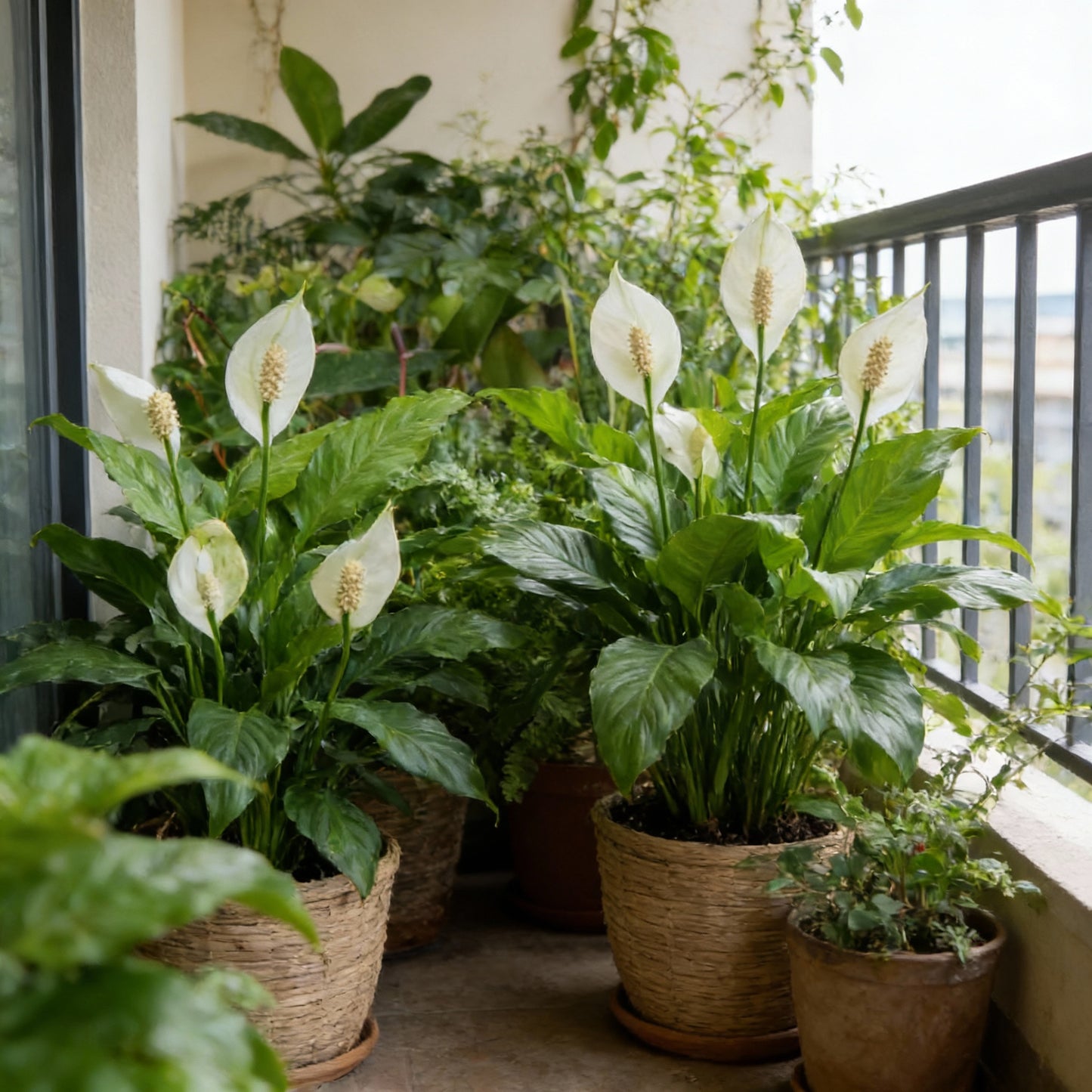
Spathiphyllum Peace Lily is a beloved evergreen perennial prized for its graceful appearance and ease of care. Originating from tropical forests of the Americas and Southeast Asia, the plant thrives in low to moderate light and prefers consistently moist, rich soil. Its striking glossy green foliage and iconic white spathes add elegance to interiors, offices, patios, or shaded garden corners. Peace Lilies are also known for their air-purifying abilities, helping remove common indoor toxins, making them both beautiful and functional additions to any space.

Planting information
planting-season

PLANTING SEASON

Spring

fruit-size

FRUIT SIZE

N/A

plant-height

PLANT HEIGHT

30–90 cm

light-requirement

LIGHT REQUIREMENT

Indirect light

water-needs

WATER NEEDS

Moderate

hardiness-zones

HARDINESS ZONES

10–12

container-garden

CONTAINER GARDEN

Yes

plant-spacing

PLANT SPACING

30–45 cm

planting-depth

PLANTING DEPTH

0.25–0.5

growing-conditions

GROWING CONDITIONS

Moist shade

Coverage
Seed Count
Recommended Coverage
SEED COUNT
100
GTIN
036000192612

Frequently Asked Questions

Can Peace Lily be grown in a bathroom with indirect light?

Yes, its preference for filtered or indirect light makes a bright bathroom suitable when temperatures remain warm and the plant has adequate growing conditions

How can Peace Lily be displayed in a decorative indoor container?

Its upright foliage and contrasting flower structures can serve as a focal feature in living spaces, offices, entry areas, or other bright indoor locations

Can Peace Lily be grouped with other shade tolerant houseplants?

Yes, it can be combined with compatible indoor plants that prefer indirect light and consistent moisture, creating a varied foliage display

How can Peace Lily be kept from becoming overcrowded?

Dividing mature clumps can help manage the plant’s size and provide additional space for healthy foliage development

Can Peace Lily be moved between indoor and shaded outdoor areas?

Yes, it can be moved to a sheltered shaded location when outdoor temperatures are suitable, while avoiding sudden exposure to strong direct sunlight

What helps Peace Lily maintain an upright foliage display?

Consistent moisture, suitable indirect light, and periodic removal of damaged or yellowing leaves can help keep the plant looking orderly