


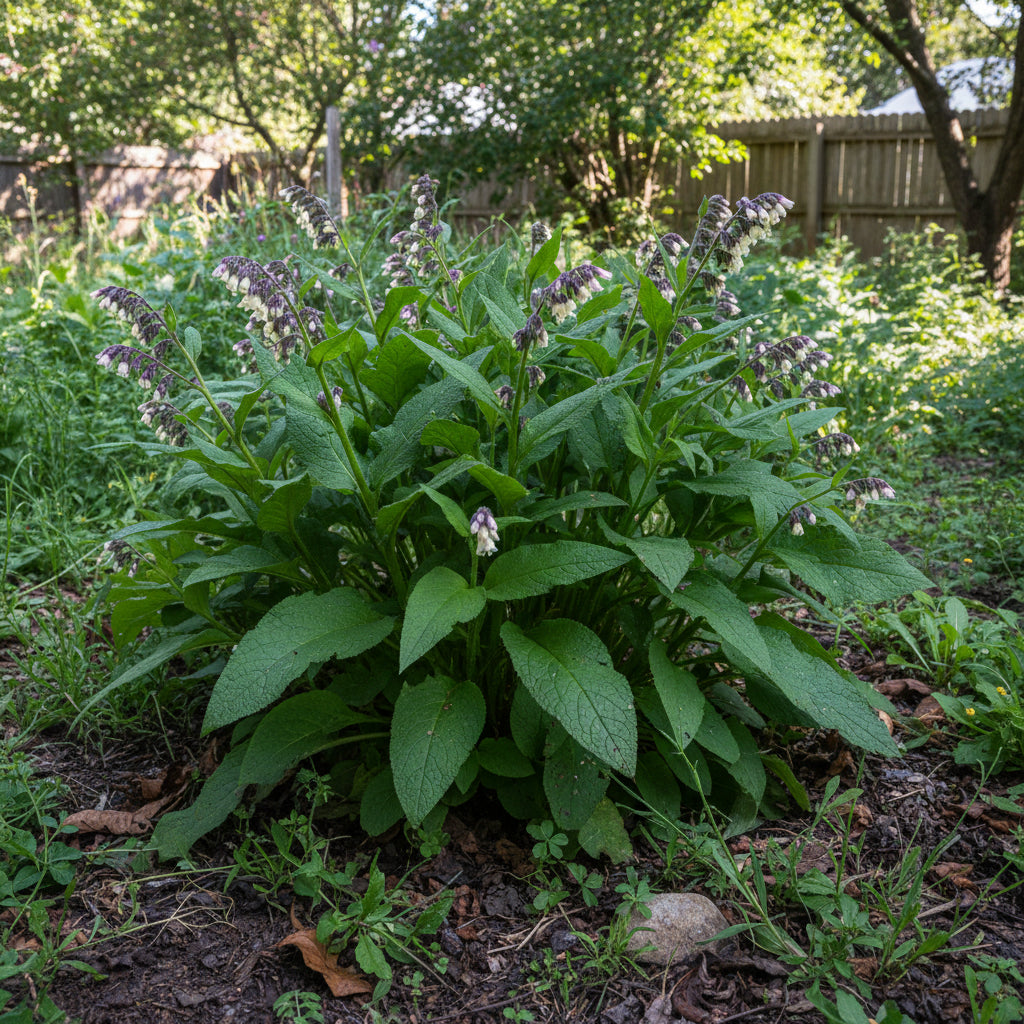

Life Cycle
Perennial

Plant Characteristics
Broad leaves

Growth Habit
Bushy spreading

Bloom Season
Late spring

Flavour Profile
Ornamental

Suitable for
Outdoor

Seed Type
Open-pollinated seeds

Plant Type
Flowering perennial

Planting Season
Winter

Fruit Size
N/A

Plant Height
60–120 cm

Light Requirement
Full Sun

Water Needs
Moderate

Hardiness Zones
USDA 4–9

Container Garden
NO

Plant Spacing
45–60 cm

Planting Depth
Surface sow

Growing Conditions
Well-drained soil
Frequently Asked Questions
Can Symphytum Comfrey develop large leafy clumps over time?
Can Symphytum Comfrey develop large leafy clumps over time?
Yes. As a perennial, it gradually forms vigorous clumps with broad green leaves that provide long-lasting garden interest.
Do the bell-shaped flowers attract bees and other pollinators?
Do the bell-shaped flowers attract bees and other pollinators?
Yes. The nectar-rich flowers are highly attractive to bees, butterflies, and other beneficial pollinating insects.
Can Symphytum Comfrey be planted in wildlife-friendly gardens?
Can Symphytum Comfrey be planted in wildlife-friendly gardens?
Yes. It is well suited to pollinator gardens, cottage gardens, and naturalistic landscape plantings.
Will the deep root system help the plant return each year?
Will the deep root system help the plant return each year?
Yes. Its extensive root system supports vigorous regrowth each growing season under suitable conditions.
Is Comfrey commonly grown for ornamental and traditional herbal purposes?
Is Comfrey commonly grown for ornamental and traditional herbal purposes?
Yes. Comfrey is widely cultivated as an ornamental perennial and has a long history of traditional herbal use. It should be used appropriately and is not intended as medical advice.
How is Symphytum Comfrey different from Borage?
How is Symphytum Comfrey different from Borage?
Symphytum Comfrey develops larger leaves and forms robust perennial clumps, while Borage (Borago officinalis) is an annual with finer foliage and star-shaped blue flowers.