



Life Cycle
Annual

Plant Characteristics
Highly aromatic leaves

Growth Habit
Upright / Bushy

Bloom Season
Bloom Season

Flavour Profile
Anise-clove aroma with spicy basil notes

Suitable for
Indoor & Outdoor

Planting Season
Spring–Summer

Fruit Size
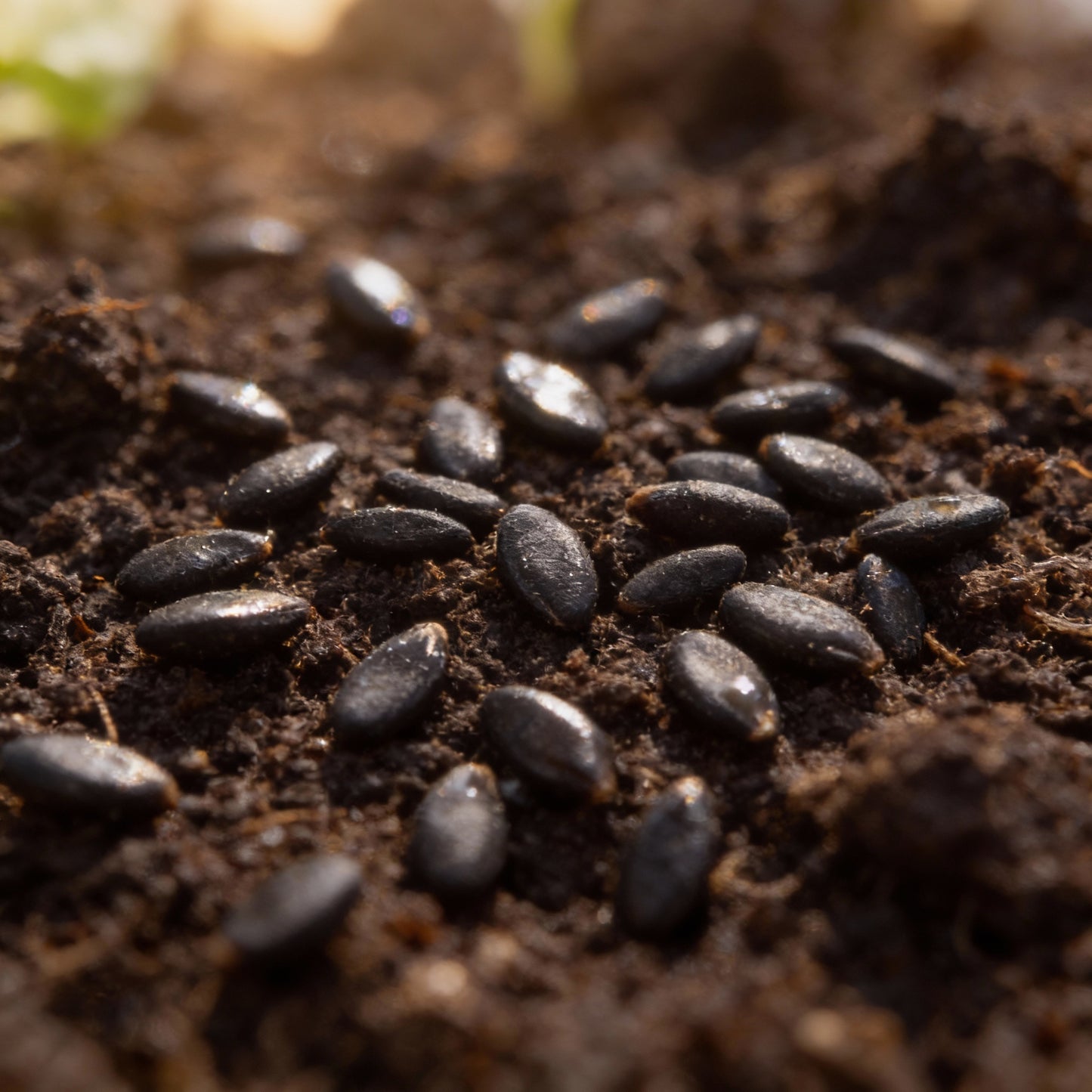
Small seeds

Plant Height
30–60 cm

Light Requirement
Full Sun

Water Needs
Moderate

Hardiness Zones
9–11

Container Garden
Yes

Plant Spacing
25–30 cm

Planting Depth
Surface sow

Growing Conditions
Warm climate
Frequently Asked Questions
How can Thai basil be kept compact during the growing season?
How can Thai basil be kept compact during the growing season?
Pinch the growing tips regularly once plants are established. This encourages branching and helps maintain a fuller, compact shape.
Can Thai basil grow indoors near a sunny window?
Can Thai basil grow indoors near a sunny window?
Yes. A bright window receiving several hours of sunlight can provide suitable conditions for indoor Thai basil, provided the container drains well.
Why does Thai basil sometimes develop purple stems?
Why does Thai basil sometimes develop purple stems?
Purple or reddish stems are a characteristic feature commonly associated with Thai basil and can become more noticeable as plants mature.
When should Thai basil leaves be harvested for cooking?
When should Thai basil leaves be harvested for cooking?
Harvest individual leaves or tender stem tips as needed, preferably before the plant produces many mature flower spikes for a strong supply of fresh foliage.
Can Thai basil be grown alongside other herbs?
Can Thai basil be grown alongside other herbs?
Yes. Thai basil can be included in a mixed herb garden when neighboring plants have similar sunlight and watering requirements.
How can Thai basil be prevented from becoming too leggy?
How can Thai basil be prevented from becoming too leggy?
Provide strong sunlight and pinch back elongated stems regularly. Adequate spacing also helps the plant develop a more balanced form.