



Life Cycle
Perennial

Plant Characteristics
Shade-loving

Growth Habit
Clump-forming perennial

Bloom Season
Spring

Flavour Profile
Ornamental

Suitable for
Outdoor

Seed Type
Flowering Perennial

Plant Type
Perennial

Planting Season
Fall

Fruit Size
N/A

Plant Height
6–10 inches

Light Requirement
Partial Shade

Water Needs
Moderate

Hardiness Zones
USDA 4–8

Container Garden
Yes

Plant Spacing
6–10 inches

Planting Depth
1/4 inch

Growing Conditions
Moist
Frequently Asked Questions
Can Trillium rivale thrive in cool woodland gardens?
Can Trillium rivale thrive in cool woodland gardens?
Yes. It grows best in cool, shaded woodland settings with humus-rich, consistently moist soil and protection from intense afternoon sun.
Why is Trillium rivale also called Brook Wakerobin?
Why is Trillium rivale also called Brook Wakerobin?
The name reflects its natural habitat, as this species is commonly found growing near cool streams and moist woodland areas in its native range.
Do the flowers have naturally spotted petals?
Do the flowers have naturally spotted petals?
Yes. The white to pale pink flowers are often decorated with darker pink or purple speckles near the center, giving each bloom a distinctive appearance.
Will the decorative leaves appear before the flowers?
Will the decorative leaves appear before the flowers?
Yes. Attractive blue-green leaves, sometimes with silvery marbling, emerge before or alongside the early spring flowers.
Can Trillium rivale be grown in alpine house containers?
Can Trillium rivale be grown in alpine house containers?
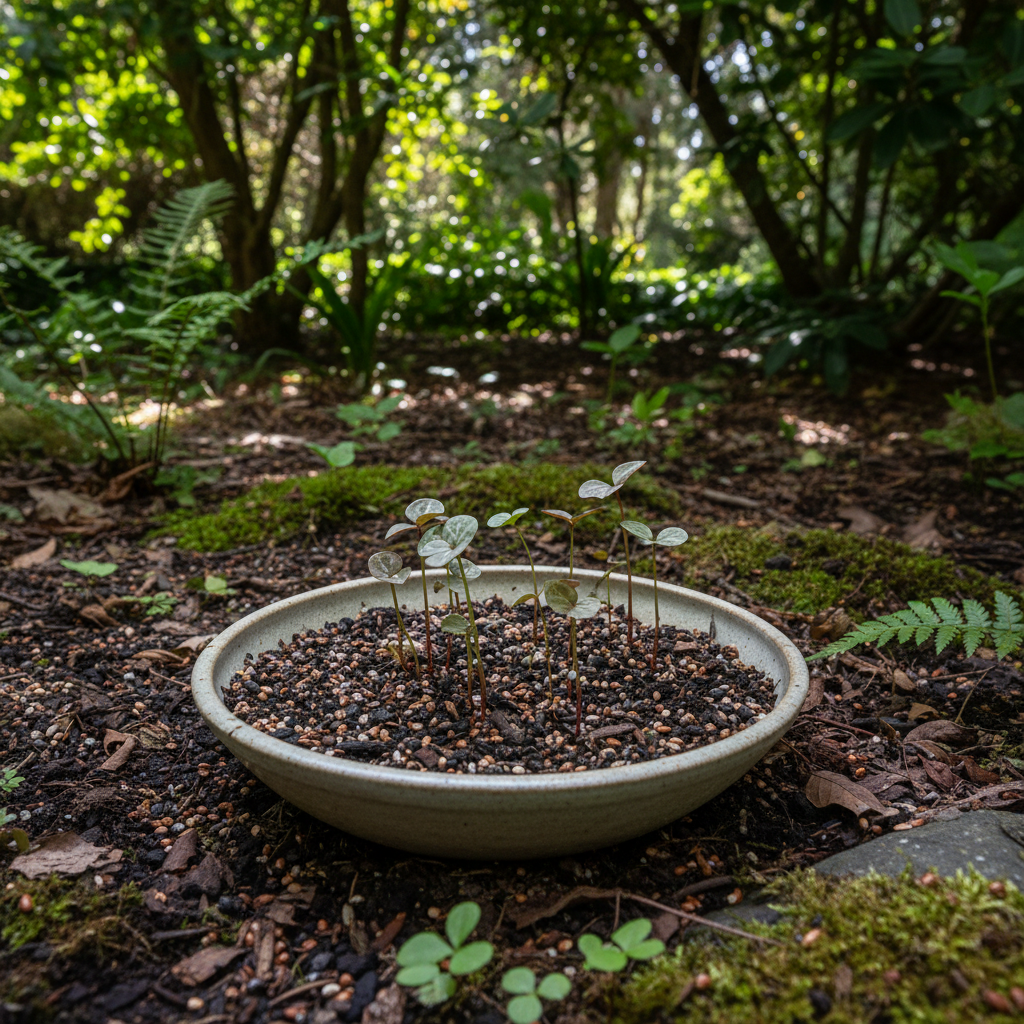
Yes. Its compact size makes it suitable for pots or alpine house cultivation where cool, moist conditions can be maintained.
Does Trillium rivale require patience to establish from seed?
Does Trillium rivale require patience to establish from seed?
Yes. Seeds germinate slowly and the plant develops gradually, but established plants are long-lived when left undisturbed.