



LIFE CYCLE
Perennial

PLANT CHARACTERISTICS
Flowering

GROWTH HABIT
Compact

BLOOM SEASON
Winter

FLAVOUR PROFILE
None

SUITABLE FOR
Outdoor

PLANTING SEASON
Autumn

FRUIT SIZE
Not Applicable

PLANT HEIGHT
15–25 cm

LIGHT REQUIREMENT
Full Sun

WATER NEEDS
Moderate

HARDINESS ZONES
3–9

CONTAINER GARDEN
Yes

PLANT SPACING
Broadcast

PLANTING DEPTH
3 mm

GROWING CONDITIONS
Cool
Frequently Asked Questions
The listing says "Perennial" in one field but "Flowering annual" in another — which is right?
The listing says "Perennial" in one field but "Flowering annual" in another — which is right?
This is inconsistent within the listing; violas like this are often grown as cool-season annuals in most climates regardless of any technical perennial tendency in milder zones.
Is "Arkwright Ruby" a real heirloom variety?
Is "Arkwright Ruby" a real heirloom variety?
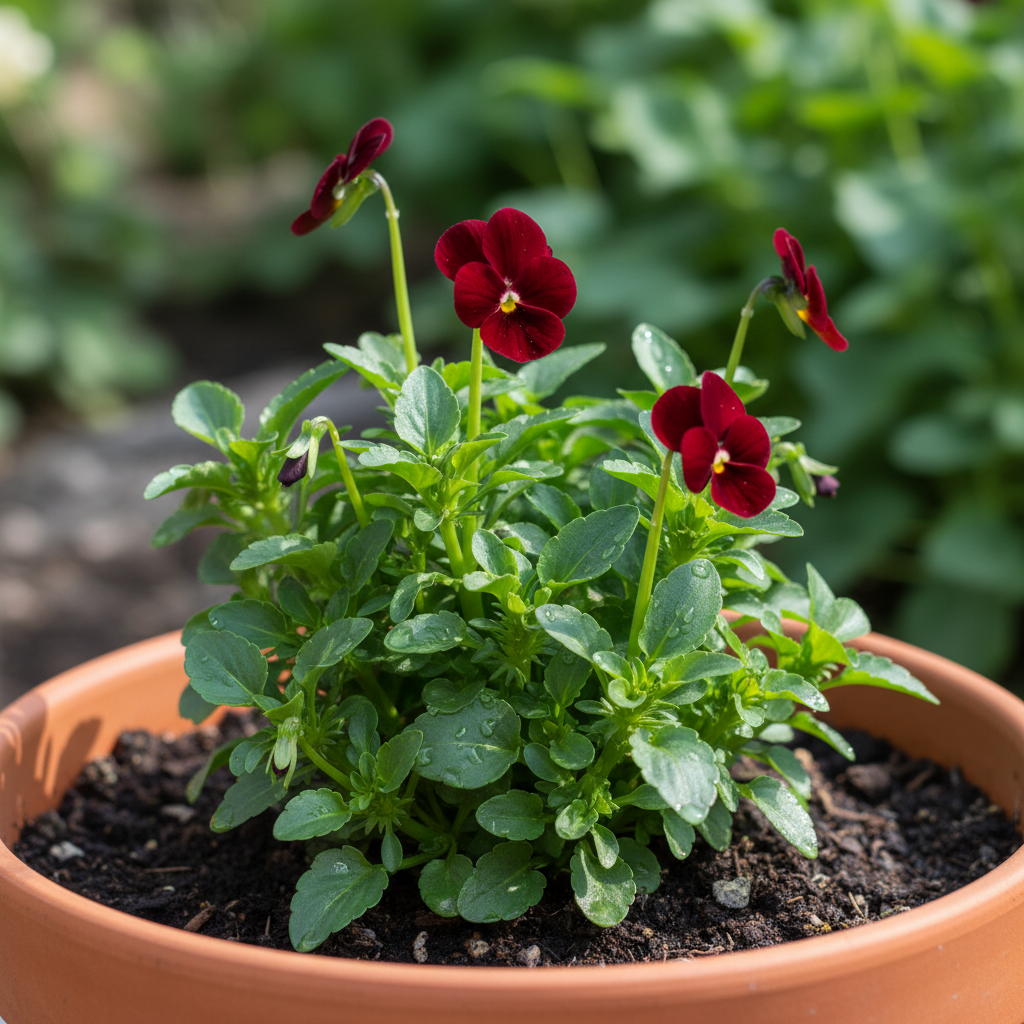
Yes, it's a genuine, long-established viola cultivar known for its deep ruby-red, velvety blooms with a dark center.
Is true ruby-red an unusual color for violas and pansies?
Is true ruby-red an unusual color for violas and pansies?
Yes, most violas lean toward purple, yellow, or white tones, so a rich, true red-ruby shade is a relatively distinctive color break in this group.
Why is this variety specifically noted for winter blooming?
Why is this variety specifically noted for winter blooming?
Certain viola cultivars, including this one, are bred to tolerate cold particularly well, allowing blooms to persist through winter months when few other flowers are active.
Can the flowers be used decoratively in food?
Can the flowers be used decoratively in food?
Yes, viola flowers are edible and their vivid ruby color makes them a popular garnish for desserts and drinks.
What does "Broadcast" spacing mean on the listing?
What does "Broadcast" spacing mean on the listing?
It indicates scattering seed relatively evenly over an area rather than precise individual spacing, common for mass plantings or informal drifts.