Skip to product information
1 of 5

Walking Stick Kale Seeds for Planting

Walking Stick Kale Seeds for Planting

Regular price $16.99 USD
Regular price Sale price $16.99 USD
Sale Sold out
Quantity

How to Sow and Plant

Sow seeds indoors 6–8 weeks before last frost, or sow directly outdoors in early spring / late summer.
Sow at about ¼ inch (≈ 6 mm) depth in nutrient-rich, well-draining soil.
If started indoors, transplant seedlings when they reach ~4–6 inches tall. Provide space for vertical growth.
Provide about 18–24 inches (45–60 cm) spacing between plants to allow full growth and prevent crowding.

How to Grow

Plant in well-draining, fertile soil enriched with organic matter or compost.
Place in full sun to partial shade for healthy leaf growth and robust stalk development.
Keep soil consistently moist but not waterlogged; water moderately, adjusting to weather and soil conditions.
Harvest young leaves regularly for softer greens; removing lower leaves encourages fresh growth.
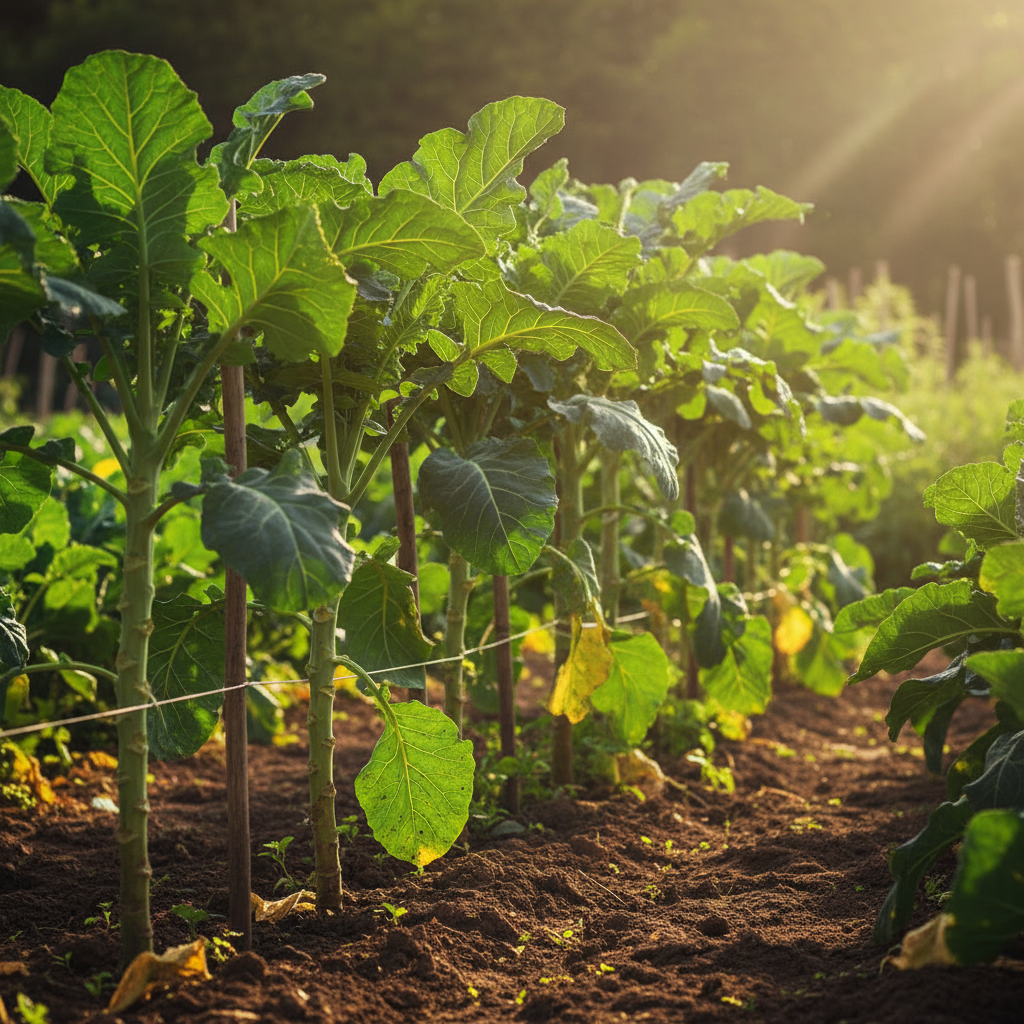
In windy or exposed areas, provide staking or support as the tall stalk can be top-heavy.

Tips

Sow in early spring or late summer for best growth and leaf quality.
Use the leaves young for salads — they’re milder then. As they mature, leaves are good for cooked dishes.
Given its height, give plenty of vertical space — ideal for gardens with tall growing room or in spacious containers.
Rotate annual planting locations each season to avoid soil-depletion or pest build-up typical of brassicas.

View full details
About
Product Information
Features
life-cycle

Life Cycle

Biennial

plant-characteristics

Plant Characteristics

Tall

growth-habit

Growth Habit

Upright

bloom-season

Bloom Season

Cole Crop

flavour-profile

Flavour Profile

mild

suitable-for

Suitable for

Outdoor

About
Walking Stick Kale Seeds for Planting
seed-type

Seed Type

Non-GMO

plant-type

Plant Type

Leafy vegetable

Walking Stick Kale is a unique heirloom variety of kale (Brassica oleracea var. originally cultivated on the Channel Islands. Known for its towering height — up to 6–10 feet — and broad, nutritious leaves, it offers both culinary value and ornamental appeal. Gardeners grow it for its tender greens used in salads, soups, stir-fries or steamed dishes. It also brings vertical structure to gardens, making it an eye-catching focal point. The plant thrives in fertile, well-draining soil under sunlight or partial shade and works well in beds or large containers.

Planting information
planting-season

Planting Season

Late Summer

fruit-size

Fruit Size

N/A

plant-height

Plant Height

6–10 ft

light-requirement

Light Requirement

Full Sun

water-needs

Water Needs

Moderate

hardiness-zones

Hardiness Zones

7–10

container-garden

Container Garden

Yes

plant-spacing

Plant Spacing

45–60 cm

planting-depth

Planting Depth

¼ inch

growing-conditions

Growing Conditions

Fertile

Coverage
Seed Count
Recommended Coverage
Seed Count
100
GTN
036000182231

Frequently Asked Questions

Why does walking stick kale need extra vertical space?

This kale can reach about 6–10 feet and develops a tall upright stalk. Giving it ample vertical room helps prevent interference with nearby plants and structures.

When is staking useful for walking stick kale?

Staking is especially useful in windy or exposed locations because the tall stalk can become top-heavy. A support can help keep the plant upright.

Can mature walking stick kale leaves still be eaten?

Yes. The listing says young leaves are suitable for salads, while more mature leaves can be used in cooked dishes such as soups and stir-fries.

How does walking stick kale differ from compact kale?

Walking stick kale has a much taller, upright form, reaching about 6–10 feet. Its unusual height gives it both edible leaf production and a strong vertical garden presence.

Why is crop rotation useful for walking stick kale?

Rotating brassica planting areas can help reduce the buildup of soil-related pests and problems associated with repeatedly growing the same crop family in one location.

Can walking stick kale grow in a large container?

Yes. The listing says it works in spacious containers. Choose a container with enough room for the tall plant and provide support where exposure to wind is likely.