



LIFE CYCLE
Perennial

PLANT CHARACTERISTICS
Fragrant groundcover

GROWTH HABIT
Spreading groundcover

BLOOM SEASON
Spring

FLAVOUR PROFILE
Ornamental

SUITABLE FOR
Outdoor

PLANTING SEASON
Autumn

FRUIT SIZE
N/A

PLANT HEIGHT
Short

LIGHT REQUIREMENT
Partial Shade

WATER NEEDS
Moderate

HARDINESS ZONES
3–7

CONTAINER GARDEN
Yes

PLANT SPACING
Close

PLANTING DEPTH
Shallow

GROWING CONDITIONS
Cool
Frequently Asked Questions
Why is Lily of the Valley suited to woodland-style gardens?
Why is Lily of the Valley suited to woodland-style gardens?
Its preference for cooler, shaded conditions and spreading perennial habit make it a natural fit for woodland-inspired planting schemes.
Can Lily of the Valley be planted beneath trees?
Can Lily of the Valley be planted beneath trees?
Yes. A shaded position beneath suitable trees can recreate the lower-light environment in which this perennial commonly grows.
How can gardeners contain spreading Lily of the Valley?
How can gardeners contain spreading Lily of the Valley?
Use defined planting areas and monitor new shoots regularly, especially where the plant is grown near pathways or other perennials.
Why are the flowers especially noticeable in shaded borders?
Why are the flowers especially noticeable in shaded borders?
The white bell-shaped blooms contrast strongly with darker green foliage and can brighten lower-light garden spaces.
Can Lily of the Valley be used in a fragrance garden?
Can Lily of the Valley be used in a fragrance garden?
Yes. Its fragrant white flowers make it suitable for garden areas designed around seasonal scent and sensory interest.
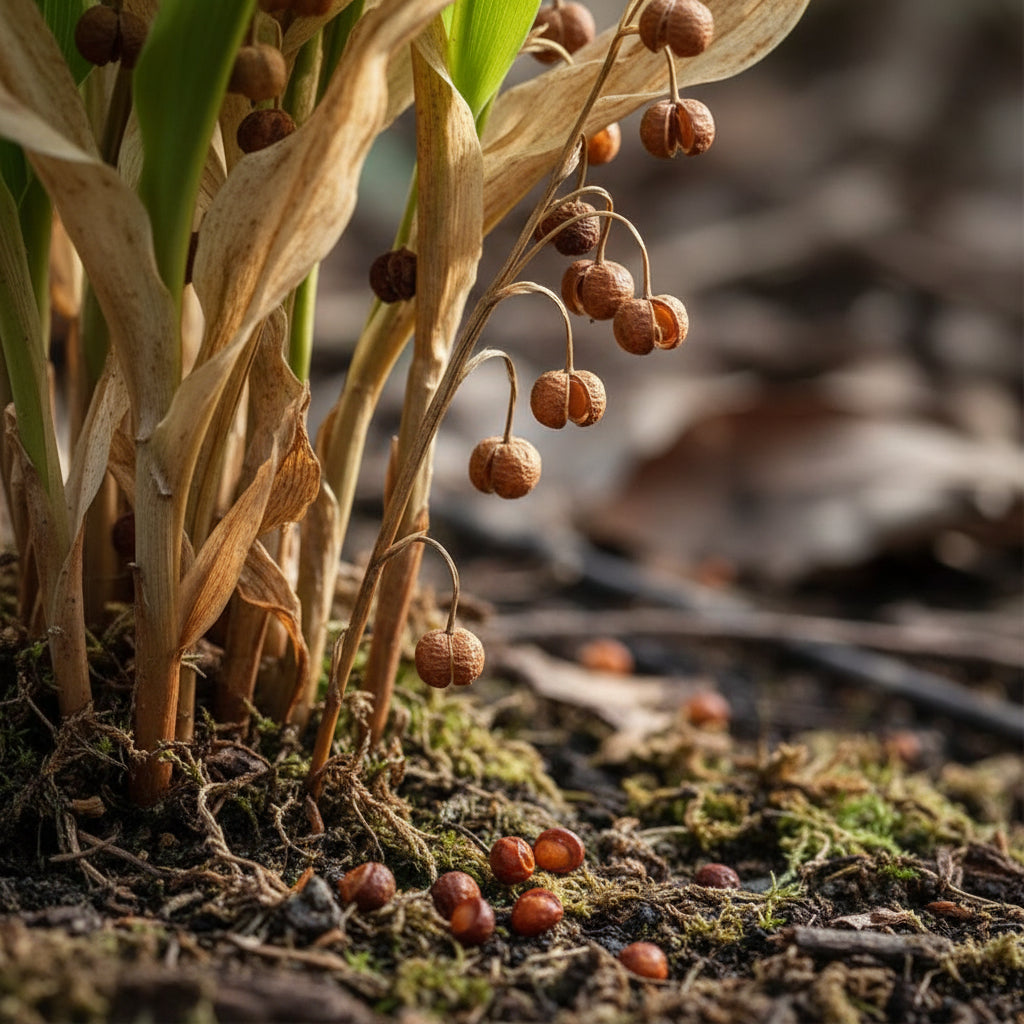
Are Lily of the Valley berries safe to eat?
Are Lily of the Valley berries safe to eat?
No. The plant is considered toxic if ingested, so berries and other plant parts should be kept away from children and pets.