


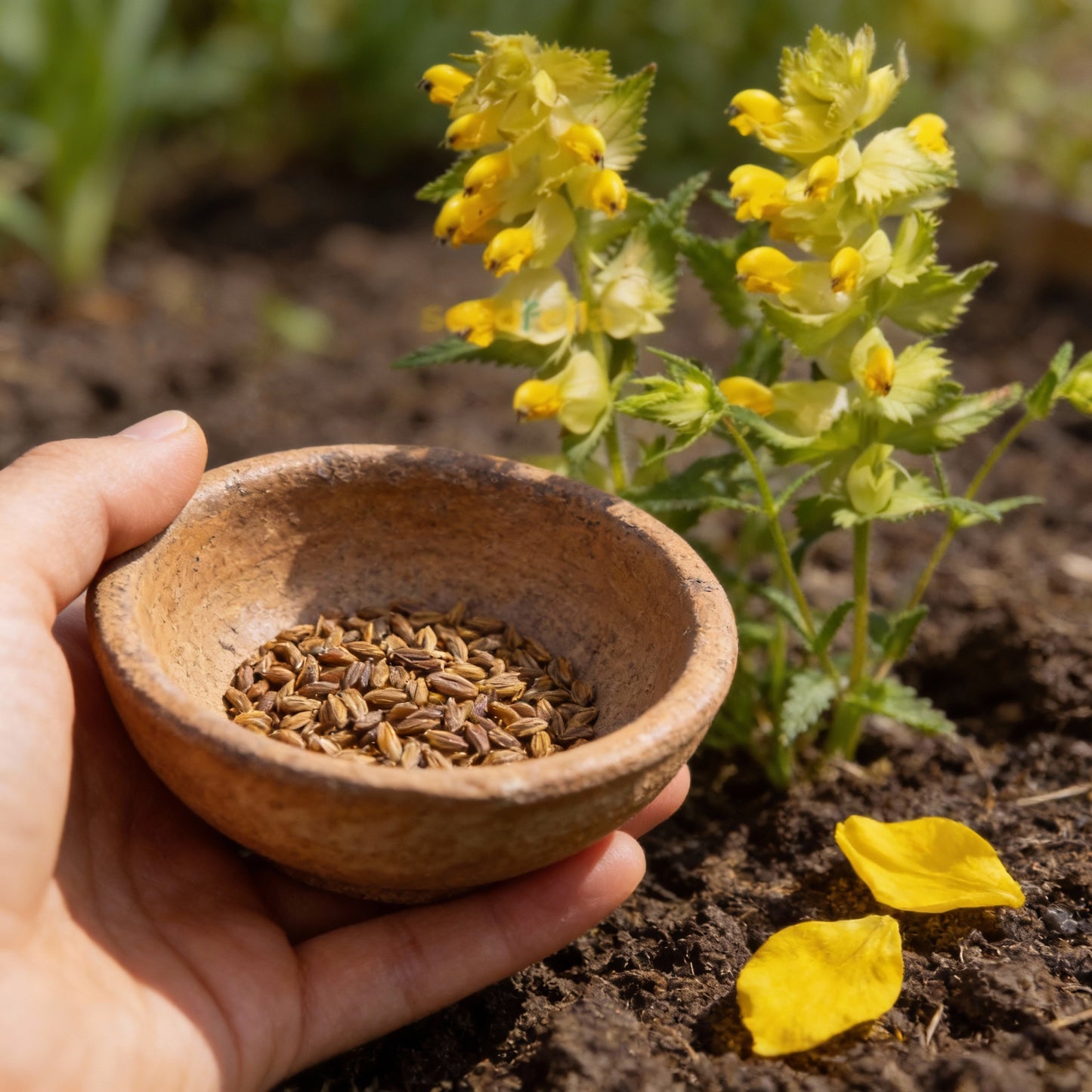

LIFE CYCLE
Annual

PLANT CHARACTERISTICS
Wildflower

GROWTH HABIT
Semi-parasitic herb

BLOOM SEASON
Late spring

FLAVOUR PROFILE
Ornamental

SUITABLE FOR
Outdoor

SEED TYPE
Non-GMO

PLANT TYPE
Wildflower

PLANTING SEASON
Spring

FRUIT SIZE
N/A

PLANT HEIGHT
20–40 cm

LIGHT REQUIREMENT
Full Sun

WATER NEEDS
Moderate

HARDINESS ZONES
3–8

CONTAINER GARDEN
No

PLANT SPACING
10–15 cm

PLANTING DEPTH
Surface

GROWING CONDITIONS
Meadow
Frequently Asked Questions
Can Yellow Rattle be used to reduce grass dominance in a meadow?
Can Yellow Rattle be used to reduce grass dominance in a meadow?
Yes, its semi-parasitic growth habit can reduce grass dominance and create more space for other wildflowers to develop.
Can Yellow Rattle be planted with native meadow grasses?
Can Yellow Rattle be planted with native meadow grasses?
Yes, it is particularly suited to grass-edge and mixed wildflower plantings where its semi-parasitic habit can interact with grasses.
Does Yellow Rattle need fertilizer for strong growth?
Does Yellow Rattle need fertilizer for strong growth?
Avoid high-nitrogen fertilizers, as Yellow Rattle is described as preferring moderately fertile soil.
Can Yellow Rattle help create a less grass-dominant meadow?
Can Yellow Rattle help create a less grass-dominant meadow?
Yes, it can be incorporated into meadow plantings where reducing grass dominance helps create space for a wider mix of wildflowers.
Can Yellow Rattle be grown as a lawn alternative?
Can Yellow Rattle be grown as a lawn alternative?
It is better suited to meadow and wildflower settings than conventional lawns, where its semi-parasitic relationship with grasses is more useful.
Can Yellow Rattle be combined with other seasonal wildflowers?
Can Yellow Rattle be combined with other seasonal wildflowers?
Yes, it can naturalize within mixed wildflower areas and add late-spring color alongside compatible meadow species.