

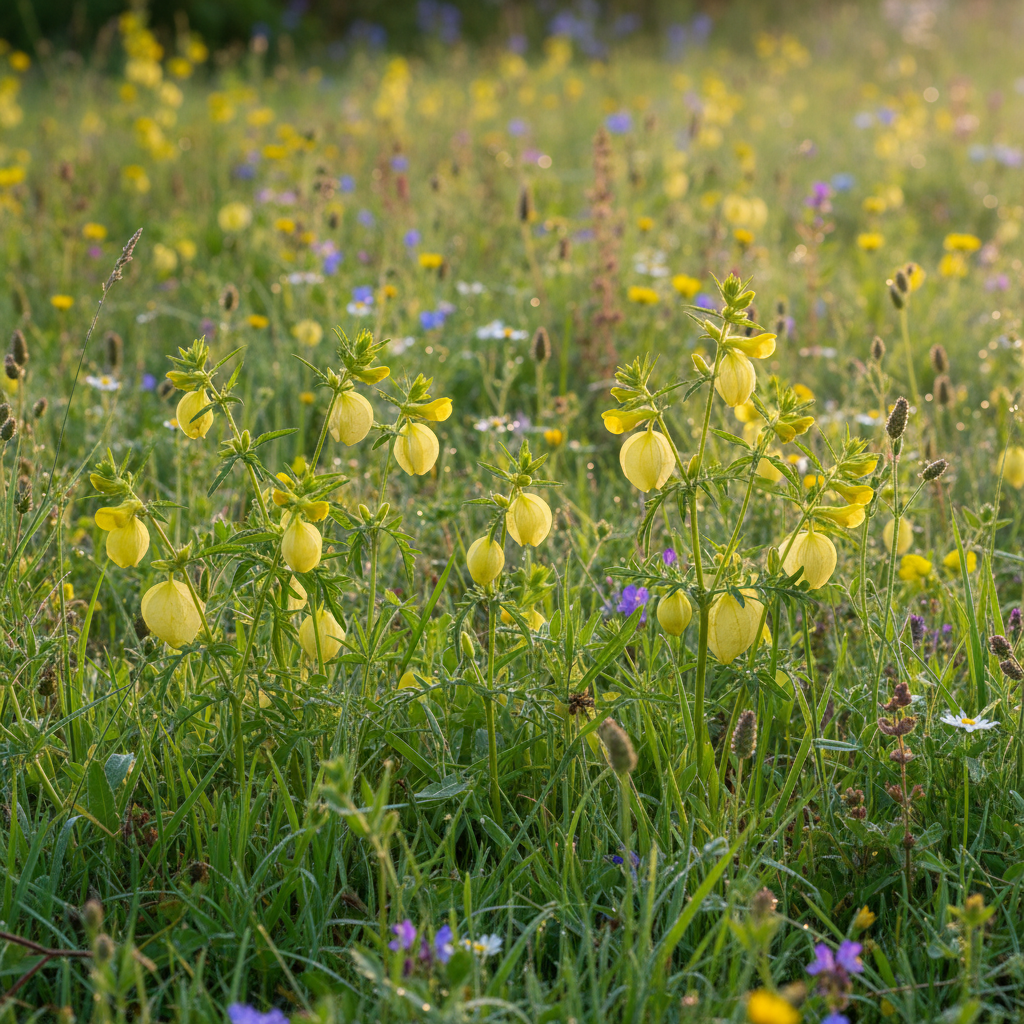

LIFE CYCLE
Annual

PLANT CHARACTERISTICS
Hemiparasitic on grasses

GROWTH HABIT
clump-forming

BLOOM SEASON
Late spring

FLAVOUR PROFILE
ornamental

SUITABLE FOR
Outdoor

PLANTING SEASON
Autumn

FRUIT SIZE
1–2 cm

PLANT HEIGHT
30–60 cm

LIGHT REQUIREMENT
Full Sun

WATER NEEDS
Low to Moderate

HARDINESS ZONES
3–7

CONTAINER GARDEN
Not Suitable

PLANT SPACING
2–3 inches

PLANTING DEPTH
0–2 mm

GROWING CONDITIONS
Low-fertility soil
Frequently Asked Questions
Why is Yellow Rattle useful in a grass-dominated meadow?
Why is Yellow Rattle useful in a grass-dominated meadow?
Yellow Rattle draws resources from nearby grasses, which can reduce grass vigour and create more space for other meadow plants.
Does Yellow Rattle need living grasses nearby to establish?
Does Yellow Rattle need living grasses nearby to establish?
Yes. As a hemiparasitic plant, it forms associations with grasses, so it is better suited to established grassy areas than to bare garden beds.
What happens to Yellow Rattle seed pods when they mature?
What happens to Yellow Rattle seed pods when they mature?
The dry seed pods can produce a rattling sound when moved. Allowing pods to mature before mowing can help the plant reseed naturally.
Why should fertilizer be avoided around Yellow Rattle?
Why should fertilizer be avoided around Yellow Rattle?
Fertilizer can encourage vigorous grass growth. Strong grass competition may make it harder for Yellow Rattle seedlings to establish and persist.
Can Yellow Rattle be used in a regularly mowed lawn?
Can Yellow Rattle be used in a regularly mowed lawn?
It is generally better suited to meadow-style areas where mowing can be delayed until seed pods mature and reseeding has occurred.
What type of meadow planting best suits Yellow Rattle?
What type of meadow planting best suits Yellow Rattle?
It fits low-fertility, sunny grassland where existing grasses provide the host plants needed for its hemiparasitic growth habit.