



Life Cycle
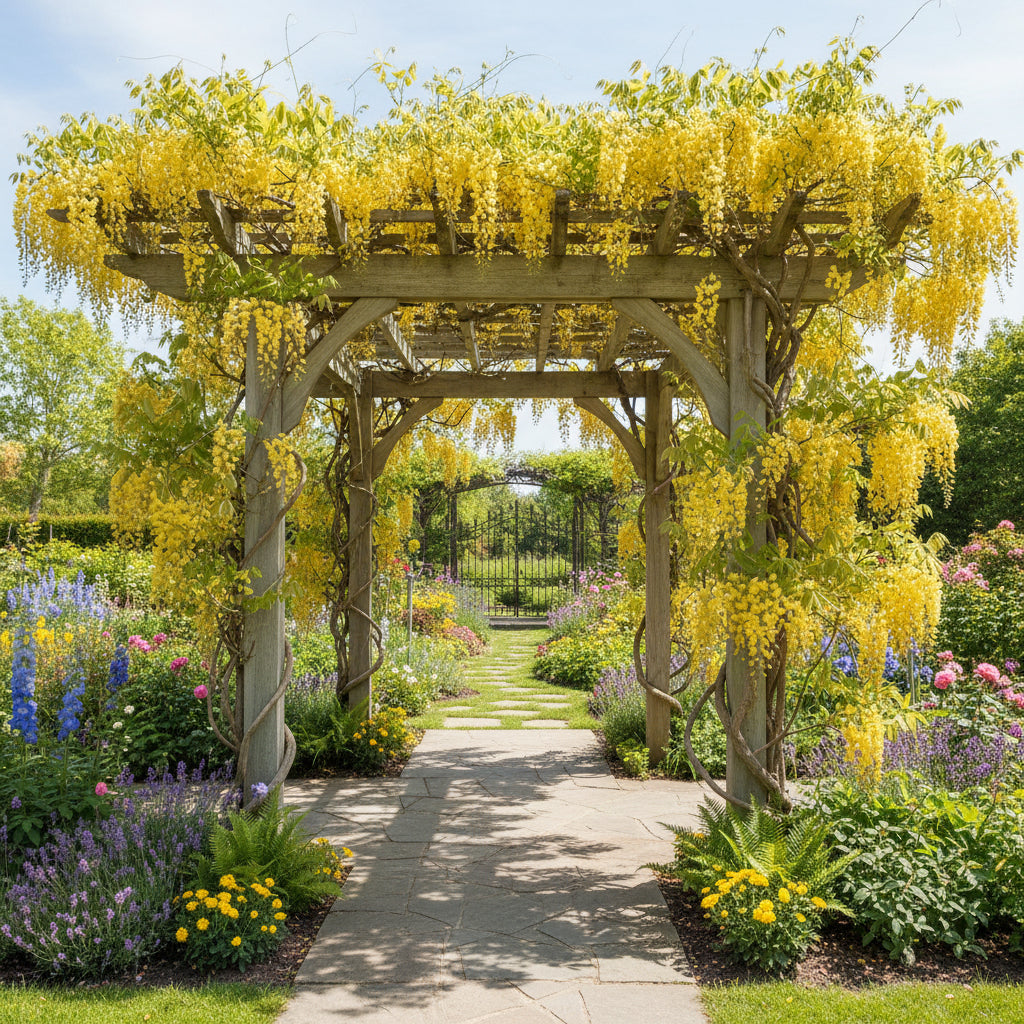
Perennial woody climber

Plant Characteristics
Fragrant cascading blooms

Growth Habit
Twining climber

Bloom Season
Late spring

Flavour Profile
Ornamental

Suitable for
Outdoor

Planting Season
Spring

Fruit Size
N/A

Plant Height
4.5–9 m

Light Requirement
Full Sun

Water Needs
Moderate

Hardiness Zones
USDA 5–9

Container Garden
Yes

Plant Spacing
180–300 cm

Planting Depth
1 cm

Growing Conditions
Well-drained
Frequently Asked Questions
Can Yellow Wisteria produce long, cascading flower clusters?
Can Yellow Wisteria produce long, cascading flower clusters?
Yes. It is admired for its graceful hanging flower clusters that create a dramatic display during the blooming season.
Can Yellow Wisteria be trained to cover pergolas and trellises?
Can Yellow Wisteria be trained to cover pergolas and trellises?
Yes. Its vigorous woody vines readily climb over pergolas, arbors, fences, and sturdy trellises with proper support.
Do the fragrant flowers attract bees and other pollinators?
Do the fragrant flowers attract bees and other pollinators?
Yes. The nectar-rich blooms attract bees, butterflies, and other beneficial pollinating insects during flowering.
Will regular pruning help maintain abundant flowering and a manageable size?
Will regular pruning help maintain abundant flowering and a manageable size?
Yes. Routine pruning encourages a tidy growth habit, improves air circulation, and supports consistent flowering.
Can Yellow Wisteria be used as a striking landscape focal point?
Can Yellow Wisteria be used as a striking landscape focal point?
Yes. Its cascading blooms and vigorous climbing habit make it an impressive feature for entrances, pergolas, and ornamental garden structures.
How is Yellow Wisteria different from Purple Wisteria?
How is Yellow Wisteria different from Purple Wisteria?
Yellow Wisteria is valued for its unusual yellow flower clusters, while Purple Wisteria typically produces lavender to violet blooms and creates a more traditional wisteria display.